Music is an important part of films, web series, advertisements, independent songs, podcasts, digital videos and social media content. Behind every professionally produced track is a creative process that combines musical ideas, recording techniques, sound design, editing and audio mixing. Music Production Course in Noida
Students looking for a Music Production Institute in Noida should consider more than the name of a course. The learning environment, practical assignments, instructor experience, software training and opportunities to work on real projects can make a meaningful difference to their progress. Music production is not limited to singing or playing an instrument. A music producer may help develop a song's arrangement, select sounds, guide recording sessions, create electronic beats, edit vocals and prepare a track for mixing and mastering.
☝ Click any topic below to jump directly to that section.
If you love music and want to understand how a song is created from its first idea to its final release, enrolling in a Music Production Course in Noida can be a practical starting point. A structured course can introduce you to the equipment, software, recording techniques and creative decisions used in modern music production.
Music production is not limited to singing or playing an instrument. A music producer may help develop a song's arrangement, select sounds, guide recording sessions, create electronic beats, edit vocals and prepare a track for mixing and mastering. The exact responsibilities depend on the project and the producer's area of specialisation.
Students looking for a Music Production Institute in Noida should consider more than the name of a course. The learning environment, practical assignments, instructor experience, software training and opportunities to work on real projects can make a meaningful difference to their progress.
Ravi Sarin Film Institute (RSFI) can be explored by students interested in creative media education, including music production. Before enrolling, prospective students should review the current course structure, available facilities, fees and admission details to determine whether the programme matches their goals.
Noida and the wider Delhi NCR region offer access to a broad creative environment that includes media companies, production studios, advertising agencies, digital content creators and entertainment businesses. For students who want to develop technical and creative skills, studying in this region can provide useful exposure to the media industry.
Choosing a course should ultimately depend on the quality of instruction and the experience you gain, rather than location alone. A convenient location is useful, but the right programme should also help you develop practical skills and a portfolio of completed work.
Music production is the process of developing, recording, arranging, editing and preparing music for listeners. It combines creative decisions with technical knowledge to turn an idea into a finished audio track. A music producer may work independently, collaborate with singers and musicians, or contribute to a larger production team. Some producers specialise in electronic music and beat-making, while others focus on film songs, background scores, vocal recordings or commercial audio projects.
Mastering prepares the final mix for distribution and playback. It involves checking tonal balance, loudness, consistency and technical delivery requirements for the intended format. A good Professional Music Production Course should explain these stages and help students understand how they connect in a complete production workflow.
Watching tutorials can be helpful, especially when learning a new software tool. However, beginners may struggle to understand which techniques to practise, how to correct recording problems or why a mix sounds different on headphones and speakers. Professional training can provide a more organised learning path, allowing students to move from basic concepts to more advanced projects with feedback along the way.
A Music Production Training in Noida programme can be particularly valuable for beginners who prefer guided practice and direct feedback. The benefits depend on the course structure, instructor support and amount of practical work included.
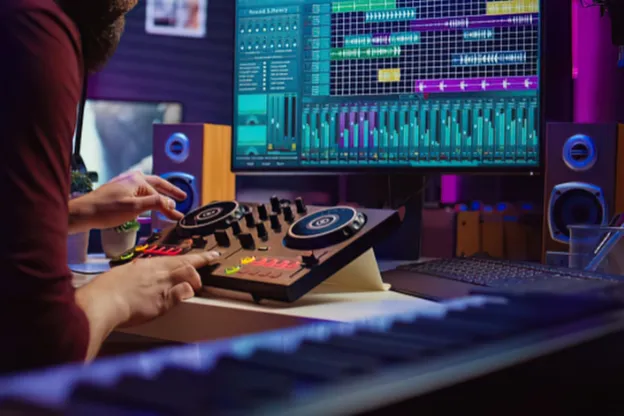
A well-planned music production programme should cover both the creative and technical sides of audio production. Beginners need to understand how sound behaves, how recording equipment works and how software can be used to develop musical ideas. The following topics are useful areas to look for when comparing a Music Production Institute in Delhi NCR. The exact syllabus varies by institute, so students should confirm which modules are included in their chosen programme.
Mixing teaches students how to balance tracks and make different elements work together. Mastering introduces the final checks and processing used to prepare a mix for release. Students should understand why listening critically is important and why excessive processing does not automatically improve audio quality.
Modern producers use a combination of software and hardware to create music. The tools required depend on the style of music, production environment and budget. Students searching for Music Production Classes in Noida should ask which tools they will learn and whether they will receive guided practice with them.
These are examples of widely used tools, not a list of software confirmed to be available at RSFI. Students should check which DAWs are included in their programme.
Practical learning is one of the most important factors to evaluate when selecting a Music Production School in Noida. A student may understand the theory of recording but still need experience setting microphone levels, reducing background noise, organising tracks and handling unexpected problems during a session.
Students should ask how much supervised studio or lab time is included and whether equipment is shared between learners. It is also worth asking whether assignments receive individual feedback or are assessed only at the end of the course. A strong practical learning experience helps students understand not just which buttons to press, but why a particular production decision improves or weakens the final result.
Music production can appeal to students from different educational backgrounds. You do not necessarily need to be a professional singer or instrumentalist to begin learning production.
People without previous production experience can start with basic music theory, listening exercises and beginner-friendly software. Consistent practice is often more important at the beginning than owning expensive equipment.Before making a decision, compare at least two or three institutes using the same criteria. Ask for the complete fee structure in writing and confirm what is included. For the latest RSFI fees, course duration and admission options, contact the institute directly rather than relying on outdated online information.
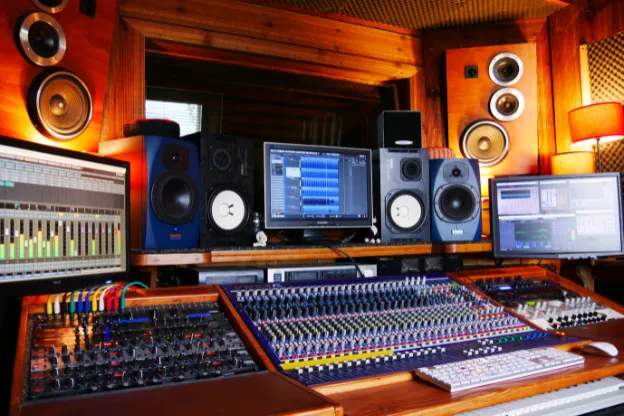
Join the Music production Music production training can help prepare students for a variety of creative and technical roles. However, completing a course does not guarantee employment or a particular income. Career opportunities depend on the quality of your work, practical experience, professional relationships and the requirements of the market.
A portfolio that demonstrates what you can actually produce can be more persuasive to prospective collaborators and clients than a list of software tools alone.
The cost of a music production programme depends on the institute, course length, practical facilities, instructor support and subjects included in the syllabus. A short introductory course may focus on the basics of a digital audio workstation, while a longer programme may cover recording, sound design, composition, mixing and portfolio development in greater depth.
For current RSFI fees, available programme durations, admission dates and payment options, contact the institute directly. Do not rely on unverified fee figures or assume that every course format is currently available.
Turn your passion for music into a professional career with Music Production training in Noida. Learn music composition, beat making, audio recording, sound design, mixing, mastering, and studio production through hands-on projects. Develop industry-ready skills for career opportunities in recording studios, film production, music, and digital media.
Book Now →Searching for the Best Music Production Institute in Noida may produce many options, but the most suitable institute is the one that matches your learning goals and offers a clear, practical training experience.
Ask practical questions about course projects, assessment, facilities and career guidance. Clear, specific answers can help you decide whether the institute meets your expectations. The goal is not simply to find a school with an attractive advertisement. It is to find a learning environment that helps you develop the skills and confidence required to produce better music.
Music production combines technical knowledge with creativity. While many skills can be learned during training, regular practice is essential for developing consistency.
One of the most valuable skills is critical listening. A producer must learn to identify what is working, what is distracting the listener and which changes will improve the track..

Delhi NCR includes a range of educational and professional environments across Noida, Delhi, Gurugram and nearby areas. Students searching for a Music Production Course in Delhi or Music Production Classes in Delhi NCR may therefore benefit from comparing programmes across the region.
The best choice depends on your priorities. A slightly longer commute may be worthwhile if the programme offers substantially better practical learning, but a nearby institute may be more convenient if its training meets your needs.
A career in music production usually develops through a combination of learning, experimentation, completed projects and professional collaboration. There is no fixed path that every producer must follow.
Listen carefully to professional productions, learn from feedback and revisit older projects to identify improvements. Consistent practice and a willingness to revise your work are essential for long-term development.
When evaluating Ravi Sarin Film Institute, students should focus on whether the available programme matches their specific learning goals. RSFI's association with creative media education may be relevant to students who are interested in how music and audio contribute to film and digital content. However, the details of the current music production programme should be verified directly with the institute.
Asking these questions will help you compare the programme fairly with other options in Noida and Delhi NCR. Ready to explore music production training? Contact Ravi Sarin Film Institute to confirm current course availability, fees, facilities and admission requirements before applying.
Develop professional skills with industry-focused Music Production training in Noida. Learn music composition, beat making, sound design, audio recording, mixing, mastering, and music arrangement through hands-on studio projects. Prepare for career opportunities as a music producer, sound engineer, composer, or audio editor in recording studios, film production, and digital media.
Book Now →Many students searching for a Music Production Course in Noida often confuse music production with sound engineering and audio mixing. Although these fields are closely connected, each has a different role in creating professional audio.
For example, when producing a song, the producer may create the instrumental arrangement, the recording engineer may capture the singer's performance, and the mixing engineer may balance the vocals with the instruments. Students looking for a Professional Music Production Course should understand these differences before selecting a specialisation. A comprehensive learning programme may introduce all three areas, while advanced training may focus more deeply on a particular discipline.s.
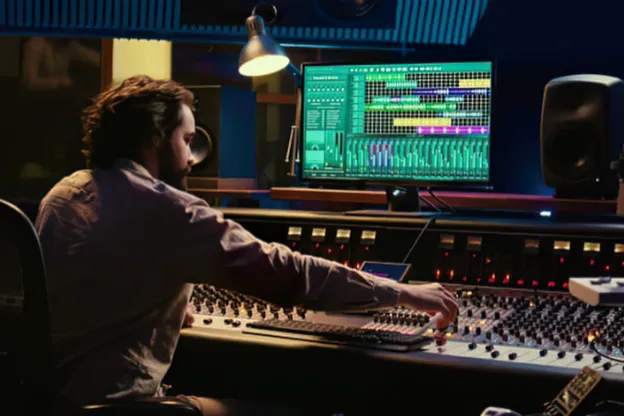
You do not need an expensive professional studio to begin learning music production. Many beginners start with a computer, headphones and suitable software, gradually adding equipment as their skills and project requirements grow.
Studio monitors can help you evaluate mixes through speakers. Their usefulness depends partly on room acoustics and placement.
Music production is used across several forms of entertainment and media. Understanding these different applications can help students decide which area interests them most.
Electronic music production involves synthesizers, drum programming, samples, effects and digital arrangements. Producers may work across genres such as house, techno, ambient, pop and hip-hop. A Music Production Course in Delhi NCR can be a starting point for exploring these applications, provided the course offers relevant instruction and practical work. Students should confirm whether their preferred specialisation is covered in the actual syllabus.
| Skill | What You'll Learn |
|---|---|
| Introduction to Music Production | Understand the fundamentals of music production, sound creation, recording techniques, music arrangement, and the role of music producers in the modern music industry. |
| Fundamentals of Music Theory | Learn musical notes, scales, chords, rhythm, tempo, time signatures, melody, harmony, and basic music theory to develop a strong foundation for composing and producing music. |
| Rhythm, Beat Making & Groove | Explore rhythm patterns, drum programming, percussion, groove creation, beat sequencing, and tempo control to produce engaging beats for different musical genres. |
| Digital Audio Workstations (DAWs) | Learn how to use professional digital audio workstations, including project setup, track management, MIDI sequencing, audio recording, editing, and music production workflows. |
| Audio Recording Techniques | Understand microphone types, microphone placement, recording environments, signal flow, gain staging, and studio recording techniques for capturing clear vocals and musical instruments. |
| Sound Design & Synthesis | Explore sound creation, synthesizers, oscillators, filters, envelopes, modulation, sampling, and sound manipulation techniques to develop unique sounds for music production. |
| MIDI Programming & Virtual Instruments | Learn MIDI sequencing, piano roll editing, velocity control, quantization, virtual instruments, software synthesizers, and digital music arrangement for creating professional compositions. |
| Music Composition & Arrangement | Understand melody development, chord progressions, harmonisation, song structure, instrumentation, layering, and arrangement techniques to create complete musical compositions. |
| Music Production Across Genres | Explore production techniques used in Bollywood music, pop, hip-hop, electronic dance music, acoustic music, background scores, and independent music to develop a versatile production style. |
| Vocal Recording & Editing | Learn vocal recording setups, microphone techniques, vocal comping, pitch correction, timing adjustments, vocal layering, and editing workflows for clean and polished vocal performances. |
| Audio Editing & Processing | Explore audio trimming, time alignment, fades, equalisation, compression, reverb, delay, and other audio processing techniques to improve clarity, balance, and sound quality. |
| Mixing Fundamentals | Learn track balancing, equalisation, compression, panning, effects processing, frequency management, and gain staging to create balanced and professional-sounding music mixes. |
| Advanced Mixing Techniques | Understand advanced signal routing, bus processing, parallel compression, automation, stereo imaging, reference mixing, and mix refinement for different musical styles and production requirements. |
| Mastering & Final Audio Processing | Learn mastering fundamentals, loudness management, tonal balance, limiting, stereo enhancement, audio quality checks, and export settings to prepare music for digital distribution. |
| Music Sampling & Loop Production | Explore sample selection, loop creation, sample chopping, time stretching, pitch shifting, beat construction, and creative sampling techniques for modern music production. |
| Background Score & Soundtrack Production | Understand background music composition, cinematic sound design, mood creation, orchestration basics, transitions, and audio layering for films, web series, advertisements, and digital content. |
| Audio Effects & Creative Processing | Learn to use audio effects such as reverb, delay, distortion, modulation, filters, and automation to enhance musical expression and create distinctive sound textures. |
| Studio Setup & Audio Equipment | Understand studio monitors, headphones, audio interfaces, MIDI controllers, microphones, acoustic treatment, signal flow, and equipment configuration for an efficient music production workspace. |
| Practical Music Production Projects | Gain hands-on experience through beat-making exercises, original compositions, vocal recording sessions, audio editing, mixing assignments, and complete music production projects. |
| Professional Music Production Portfolio | Apply your skills to create a professional portfolio featuring original tracks, instrumentals, music arrangements, recorded vocals, mixed songs, and selected production projects. |
| Professional Music Production Career Preparation | Develop practical knowledge and industry-relevant skills for career opportunities as a Music Producer, Music Composer, Sound Engineer, Recording Engineer, Mixing Engineer, Mastering Engineer, Beat Maker, or Audio Editor. |
MIDI, audio samples and virtual instruments are important parts of modern music production. Learning how they work makes it easier to compose music, create arrangements and experiment with different sounds.
Students comparing Music Production Classes in Noida should check whether the course includes practical MIDI programming, sample editing and virtual instrument training.
Audio mixing is one of the most important stages in music production. Even a well-composed song can sound unclear if the vocals are too quiet, the bass overwhelms other instruments or too many sounds compete for attention.
Compare your mix with suitable reference tracks at a comfortable listening level. Pay attention to vocal clarity, low-frequency balance, overall brightness and the relationship between different musical elements. Beginners should focus on making deliberate improvements rather than applying every available effect. A clean, well-balanced mix often depends more on good arrangement and careful listening than on complicated processing.
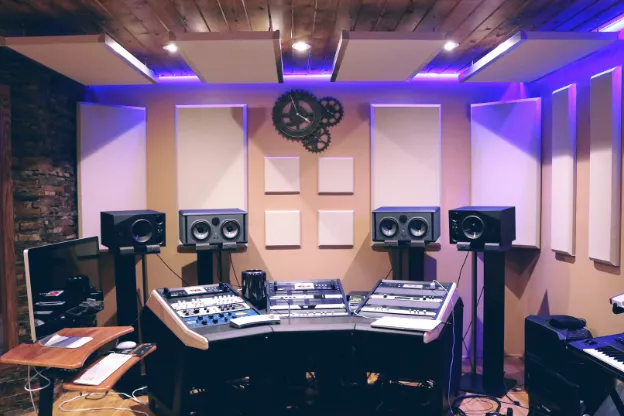
A portfolio allows aspiring producers to demonstrate their abilities through completed work. It can be useful when approaching musicians, applying for relevant opportunities or looking for freelance projects.
Students choosing a Music Production Diploma Course should ask whether portfolio projects are part of the curriculum and whether they receive feedback before presenting their work publicly.
Understanding copyright is an important part of working professionally in music production. Producers may use original recordings, samples, loops, virtual instruments and material created by other musicians. Each source can have different usage conditions.
Licensing terms can vary, and legal requirements depend on the circumstances and jurisdiction. When a project involves significant commercial use or disputed rights, seek advice from a qualified legal professional.
Beginners often focus on software and effects before developing the fundamentals that make a track sound clear and cohesive. Recognising common mistakes early can help students improve faster.
Professionally released music may involve experienced teams, treated studios, specialist equipment and multiple rounds of revisions. How to improve: Compare your current work with your previous projects and focus on measurable improvements in clarity, arrangement and consistency.
One of the most common questions students ask before enrolling is how much a music production course costs. The fees can vary depending on the course duration, syllabus, practical training facilities, software access and level of instructor support. Students comparing a Music Production Course in Noida should understand what is included in the total fee before making a decision.
You should also ask about payment schedules, cancellation terms and refund policies. If a course advertises placement assistance, clarify what that support actually includes rather than assuming that a job is guaranteed. Important: There is no single standard fee for every music production programme. Contact the institute directly for current fees, available batches and course details
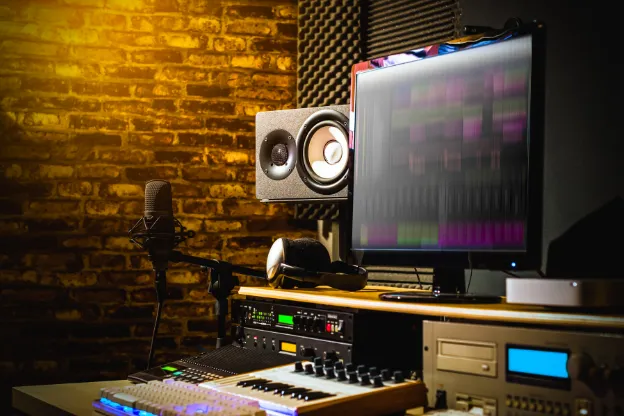
Artificial intelligence is becoming part of several creative workflows, including music production, audio editing, sound generation and music discovery. For aspiring producers, understanding these developments can help them use new tools without losing sight of the fundamentals of music and sound.
Some applications can help identify technical issues or provide information about audio characteristics. Producers should still verify results through listening and appropriate measurements.
Starting music production can feel overwhelming because there are many software tools, effects and technical concepts to learn. A structured learning plan can make the process easier by breaking it into manageable stages.
By the end of this period, you may have a small collection of beginner projects that demonstrate your progress. Continue improving them as your skills develop. A structured Music Production Training programme can provide additional guidance, practical feedback and a more organised learning environment for students who prefer classroom-based instruction.
Freelance music production can offer opportunities to work with musicians, content creators, independent artists and businesses. However, building a reliable freelance career takes time. Technical ability, communication, consistent delivery and a professional portfolio all matter.
The services you offer should reflect your actual abilities. It is better to deliver a small number of services reliably than to advertise advanced work you are not yet prepared to complete.
Some students know they want to work in music but are unsure how to prepare for admission to a music production programme. In most cases, the best preparation is to understand your interests, identify your learning goals and ask the institute clear questions about the course.
Not necessarily. Beginner-level programmes may accept students without previous production work. However, if you have experimented with music software or created a short track, you can ask whether it is useful to share during the admission process. Choosing the right Music Production School in Noida begins with understanding what you want to learn and checking whether the available programme supports those goals.
Music production offers an opportunity to combine creativity, technology and practical problem-solving. Whether your goal is to produce original songs, create beats, record vocals, work with filmmakers or develop audio for digital content, a structured learning programme can help you build a stronger foundation. When comparing a Music Production Course in Noida, look beyond promotional claims and focus on the details that affect your learning: the syllabus, software, practical sessions, instructor support, course fees and opportunities to complete original projects. Students considering a Music Production Institute in Noida, a Music Production Course in Delhi NCR or a Professional Music Production Course should take time to compare their options and ask clear questions before enrolling.
Join RSFI's industry-focused Music Production Course and explore Music Theory, Beat Making, Music Composition, Digital Audio Workstations (DAWs), Audio Recording, Sound Design, MIDI Programming, Music Arrangement, Vocal Recording, Audio Editing, Mixing & Mastering, and professional portfolio development.
Explore Music Production CourseTalk to the RSFI admissions team to learn about course options and admission details.
Apply Now🎭 Acting & Presentation
🎬 Filmmaking
📸 Cinematography
🎞 Animation & VFX
🎭 Advertising, PR & Events
🎵 Music Production
📷 Still Photography
🏠 Interior Design
👗 Fashion Design
View All Courses🎭 Short-Term Certificate Programs
🎬 Diploma Programs
💻 Online Programs
🎞 3-Year Diploma Programs
Explore ProgramsDiscover other creative and media-focused learning options at RSFI, including filmmaking, acting, cinematography, photography, animation and visual effects.
Browse ProgramsHave questions about eligibility, course duration or admissions? Connect with our team for guidance.
Enquire Now