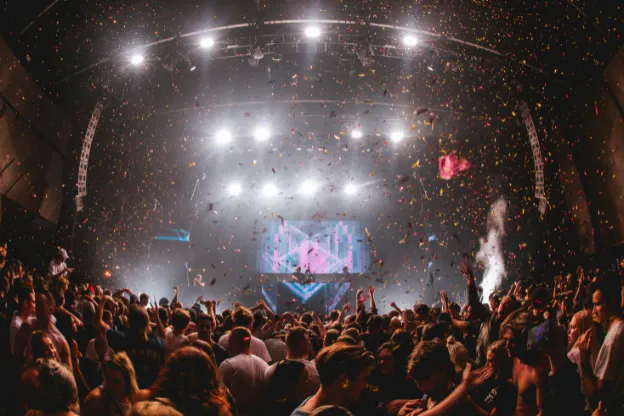
Music is everywhere. From Bollywood songs and independent music albums to web series, advertisements, podcasts, short films and social media videos, music plays an important role in the entertainment industry. Behind every professionally produced track, there is a creative process involving composition, sound selection, recording, arrangement, mixing and mastering.Music Producer Course in Noida
For students living in Noida, Greater Noida, Ghaziabad, Delhi and nearby areas, choosing the right Music Producer Course in Noida can be a practical first step towards developing professional music production skills.
☝ Click any topic below to jump directly to that section.
Music production is the process of creating, developing and preparing music for listeners. It involves several creative and technical activities, from developing an initial musical idea to producing a finished track.
A music producer may handle several of these responsibilities independently or work with composers, singers, lyricists, sound engineers and other musicians. Today, music production is not limited to traditional recording studios. Many producers create music using digital audio workstations (DAWs), MIDI instruments, virtual instruments and home recording setups.
A music producer is a professional who helps shape the sound and overall direction of a musical project. Think of a music producer as someone who understands how different musical elements should come together to create a complete listening experience. For example, a singer may have a beautiful voice and a songwriter may have excellent lyrics. However, the song still needs suitable music, rhythm, instruments, arrangements and sound quality.
Preparing the final mixed track for distribution across streaming platforms, videos, albums and other listening formats. A music producer may perform all these tasks or specialise in one particular area.
The music industry is changing rapidly. Music is no longer restricted to films, television and traditional albums. Independent artists, digital creators, production houses, advertising agencies and online platforms regularly require professionally produced audio.
Digital platforms make it easier for independent artists and producers to collaborate with musicians from different cities and countries. For students interested in these opportunities, professional Music Production Training in Noida can help build the technical foundation needed to enter the industry.
You do not need to become a famous musician before starting your music production journey. What matters is learning the fundamentals and developing practical skills through consistent work. Here is a step-by-step approach for beginners.
Try to understand how different instruments, beats, melodies and vocals are used in each genre. Listen carefully to the introduction, verses, chorus, bridge and ending of a song. This will gradually help you develop a better understanding of musical structure.
Noida has developed into an important educational and media-related destination in the Delhi NCR region. Students can explore opportunities related to filmmaking, television, digital media, advertising, photography, sound and creative production. For someone interested in music, enrolling in a Music Production Course in Noida can offer a convenient way to learn professional production techniques while studying close to home.
Students can gradually develop the technical knowledge and portfolio required for entry-level opportunities and freelance projects. If you are searching online for a Music Production Course in Delhi NCR, compare institutes carefully and ask to see their practical learning facilities before making a decision.
A professional music production programme should cover both creative and technical aspects of audio production. The exact syllabus and course duration vary from institute to institute, but the following subjects are useful for beginners and aspiring professionals.oftware knowledge is important, but it is not the only requirement for a successful creative career.
Students should apply their learning by completing an original production project. A final assignment could include producing an instrumental, recording a vocal track, arranging a song or creating background music for a short film. This practical work can become an important part of a student's professional portfolio.
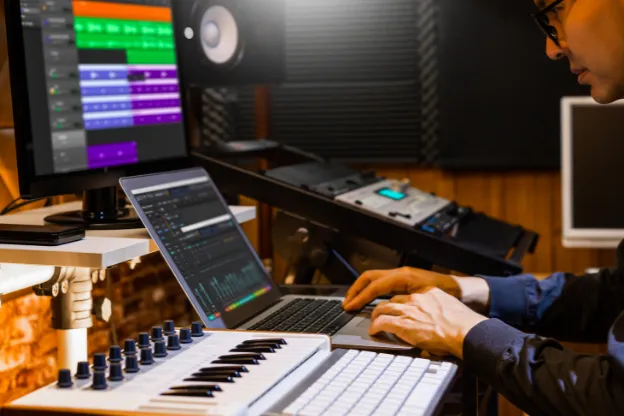
Music producers use different software and hardware depending on their creative requirements. Understanding the commonly used tools can help beginners make informed decisions while selecting a Music Producer Course in Noida.
Beginners do not need to purchase every piece of equipment immediately. Start with a suitable computer, headphones and basic software. Gradually invest in additional equipment as your production skills and requirements develop.
Learning software is only one part of becoming a successful music producer. You also need creative thinking, musical understanding and professional working habits.
Professional production skills develop through repeated practice. Students should expect to make mistakes and improve gradually.
One of the most interesting aspects of music production is that the skills can be used in several creative industries. After completing suitable training and developing a strong portfolio, students can explore different career directions.
Freelancers offer different services to clients, such as beat making, audio editing, vocal recording, mixing and music arrangement. The right career direction depends on your interests, practical abilities, portfolio and professional experience.

Join the music production Course in NoidaAfter developing production skills, students can consider working in a studio or starting as independent freelancers. Both options have advantages and challenges.
For beginners, working in a professional studio can provide valuable practical exposure. Freelancing can become an additional source of experience once you have developed the required skills and confidence. You do not have to choose only one path. Many music producers combine studio work with independent projects.
India has a large entertainment ecosystem that includes films, television, web series, advertising, documentaries and digital content. Music and sound are important parts of these productions.A music producer with suitable technical and creative skills may explore opportunities in:
Games, animations and interactive content use music, sound effects and designed audio elements. Students who are also interested in filmmaking can explore how music production connects with visual storytelling. For example, an understanding of filmmaking and video production can help a music producer create more effective background scores for visual scenes.
Turn your passion for music and creativity into a professional career with the Music Production Course in Noida. Learn music composition, sound design, audio recording, mixing and mastering, beat making, music arrangement, digital audio workstations (DAWs), and professional music production techniques through practical projects and hands-on training. Develop your musical creativity, master industry-relevant software, and gain practical skills for career opportunities in the music industry, films, television, OTT platforms, advertising, digital media, and independent music production. Build your professional music portfolio and explore exciting career paths as a music producer, sound engineer, audio editor, music composer, beat maker.
Book Now →A course should not be selected simply because an institute calls itself the best. Students should examine its teaching approach, facilities, curriculum and practical learning opportunities.If you are comparing options for the Best Music Production Institute in Noida, consider the following points.
Ask how much time students spend creating music rather than only learning theoretical concepts. Practical assignments are important for developing technical confidence.
Starting music production can be exciting, but beginners sometimes make mistakes that slow down their learning. Here are some common problems and how to avoid them.
Using someone else's music, samples or recordings without appropriate permission can create legal and distribution problems. Better approach: Use original or properly licensed material and understand music rights before releasing commercial projects.
Your portfolio is one of the most important tools for showing potential clients and employers what you can do. Instead of simply writing that you know FL Studio or Ableton Live, demonstrate your abilities through completed projects.
Make sure you own or have permission to publish the material you share. A well-organised portfolio can help you approach artists, studios, production companies and independent clients.
Yes, music production can be a suitable career direction for beginners who are genuinely interested in music and technology. You do not necessarily need previous professional experience to start learning.However, it is important to understand that music production is not an overnight career.
Basic musical knowledge can be helpful, but many production concepts can be learned step by step. A beginner can start with basic rhythm, melody and DAW training before progressing towards advanced production techniques. The most important qualities are curiosity, regular practice and an interest in creating music.
Choosing a suitable learning environment is an important part of starting a career in any creative industry. Ravi Sarin Film Institute (RSFI), Noida, is a creative education institution associated with media, filmmaking and entertainment-related learning. For students interested in music production, it is worth exploring how professional audio skills connect with the wider media and entertainment industry.
RSFI's wider creative education environment can also be relevant to students interested in exploring the relationship between music, visual storytelling and entertainment production. For example, music producers can collaborate with filmmakers to create background scores, soundtracks and original music for visual projects.
Develop professional skills with industry-focused training in Music Production in Noida. Learn music composition, beat making, sound design, audio recording, music arrangement, mixing and mastering, sound engineering, MIDI programming, and digital audio workstation (DAW) techniques through practical exercises and hands-on projects. Build your musical creativity and professional portfolio while preparing for career opportunities as a music producer, sound engineer, audio editor, music composer, beat maker, recording engineer, or mixing and mastering engineer across the film industry, music labels, television, OTT platforms, advertising, gaming, and digital media industries.
Book Now →Artificial Intelligence is becoming an interesting part of the modern music industry. Music producers are exploring AI-powered tools to experiment with sounds, improve workflows and generate new creative ideas.However, AI does not replace the creative understanding required to produce meaningful music. Producers still need to understand composition, arrangement, sound selection and mixing.
Students enrolling in a professional Music Production Course in Noida should understand both traditional production techniques and emerging digital tools. The ability to combine technology with creativity can help aspiring producers adapt to changing industry workflows.
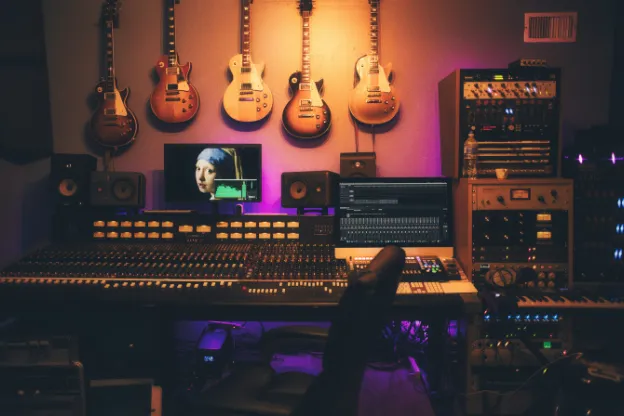
One common question among beginners is whether they should create music from home or work in a professional recording studio. Both environments have different advantages, and the right choice depends on the type of project and available equipment.
Beginners can start with a basic home setup to understand music production. As their skills develop, professional studio exposure can help them understand advanced recording workflows and industry practices.
Music production can offer several income opportunities beyond working as a full-time employee. Producers can develop multiple services depending on their technical knowledge and creative interests.
Develop promotional jingles, sound identities and original audio for commercial projects. Your earnings will depend on the quality of your work, client requirements, licensing arrangements and professional experience. Building a reliable portfolio should be a priority before expecting consistent income.
| Skill | What You'll Learn |
|---|---|
| Introduction to Music Production | Understand the fundamentals of music production, its history, creative applications, production workflows, and importance in the music industry, films, television, OTT platforms, advertising, and digital media. |
| Fundamentals of Music Theory | Learn the basics of music theory, including notes, scales, chords, rhythm, tempo, melody, harmony, time signatures, and musical structures to develop a strong foundation in music composition and production. |
| Introduction to Digital Audio Workstations (DAW) | Explore professional DAW software, project setup, user interfaces, audio tracks, MIDI tracks, editing tools, plugins, and production workflows used in modern music production. |
| Music Composition & Arrangement | Learn how to create original musical compositions using melodies, harmonies, chords, rhythms, and different musical elements. Understand song structures, arrangements, intros, verses, choruses, and outros. |
| Beat Making & Rhythm Programming | Develop skills in beat creation, drum programming, rhythm patterns, groove development, percussion arrangement, and electronic beat production for different music genres. |
| MIDI Programming & Instrumentation | Understand MIDI sequencing, virtual instruments, MIDI controllers, piano rolls, note programming, velocity control, and digital instrumentation to create professional musical arrangements. |
| Sound Design & Synthesis | Explore sound design techniques, synthesizers, oscillators, filters, envelopes, modulation, sound layering, and audio synthesis to create unique sounds, textures, and electronic music elements. |
| Audio Recording Techniques | Learn professional audio recording techniques, microphone types, microphone placement, recording environments, signal flow, gain staging, and studio recording practices for vocals and musical instruments. |
| Studio Setup & Recording Equipment | Understand studio equipment, audio interfaces, microphones, studio monitors, headphones, MIDI keyboards, mixers, cables, and acoustic treatment required for a professional music production environment. |
| Vocal Recording & Editing | Develop skills in vocal recording, microphone techniques, vocal comping, pitch correction, timing alignment, vocal tuning, editing, and processing to achieve clean and professional vocal recordings. |
| Music Arrangement & Layering | Learn how to arrange musical elements, layer instruments, create transitions, balance different sound elements, and develop complete musical tracks for songs, background scores, and commercial productions. |
| Audio Editing & Processing | Explore audio editing techniques, trimming, cutting, time stretching, pitch shifting, noise reduction, audio restoration, waveform editing, and creative audio processing for professional music production. |
| Equalisation (EQ) & Audio Effects | Understand equalisation, frequency balancing, filters, compression, reverb, delay, chorus, distortion, and other audio effects to improve sound clarity, depth, character, and overall quality. |
| Mixing Techniques & Workflow | Learn professional mixing techniques, track balancing, panning, gain staging, frequency management, stereo imaging, automation, and signal processing to create balanced and polished music productions. |
| Advanced Mixing & Sound Processing | Develop advanced skills in multitrack mixing, parallel compression, sidechain processing, bus processing, dynamic control, spatial effects, and professional mixing workflows for different music genres. |
| Music Production for Different Genres | Explore production techniques for Bollywood, Pop, Hip-Hop, EDM, Electronic, Classical, Acoustic, Indie, and other contemporary music genres while understanding their unique sounds and arrangements. |
| Background Score & Film Music Production | Learn background score creation, cinematic sound design, musical storytelling, orchestration basics, atmospheric sound creation, and music production techniques for films, web series, advertisements, and visual media. |
| Sound Engineering Fundamentals | Understand audio signal flow, analogue and digital audio, sound frequencies, decibels, acoustics, monitoring systems, recording principles, and technical concepts used in professional sound engineering. |
| Sampling & Loop Production | Learn audio sampling, loop creation, sample chopping, slicing, beat manipulation, sample layering, and creative sound manipulation to develop original beats and musical compositions. |
| Mixing & Mastering | Understand the complete mastering process, loudness optimisation, limiting, stereo enhancement, frequency control, final audio balancing, and mastering standards for professional music releases and digital platforms. |
| Live Sound & Audio Production | Explore live audio systems, microphones, mixing consoles, speaker setups, sound reinforcement, stage monitoring, and basic live sound engineering techniques for concerts, events, and performances. |
| Music Exporting & Distribution Formats | Understand audio formats, WAV, MP3, bit depth, sample rates, export settings, loudness standards, and delivery requirements for Spotify, YouTube, Apple Music, OTT platforms, and other digital music platforms. |
| Practical Projects & Industry Workflows | Gain hands-on experience through beat-making exercises, original music composition, vocal recording, sound design, audio editing, mixing, mastering, and complete music production projects. |
| Portfolio Development & Music Project Creation | Build a professional music portfolio featuring original compositions, instrumental tracks, recorded songs, beats, background scores, sound design, and fully produced music projects to showcase your creative and technical abilities. |
| Career Preparation in Music Production | Prepare for career opportunities as a Music Producer, Music Composer, Sound Engineer, Audio Editor, Beat Maker, Recording Engineer, Mixing Engineer, Mastering Engineer, or Sound Designer across music labels, film production, television, OTT platforms, advertising, gaming, and digital media industries. |
After completing training, students may apply for opportunities in recording studios, music companies, production houses and digital media organisations. Having practical knowledge is important, but students should also know how to present their skills professionally.
A portfolio that demonstrates practical ability can make it easier for employers and clients to understand your capabilities.
The music production industry continues to evolve with changes in technology, listening habits and digital entertainment. Aspiring producers should pay attention to emerging developments rather than limiting themselves to traditional production techniques.
Film and Digital Content: Original scores, soundtracks and background music remain important parts of visual storytelling. Students looking to enter this industry should build strong fundamentals while staying updated with new production techniques and tools.

Creating a song is only one part of the music production process. Once a track is completed, it needs to reach listeners through suitable music distribution platforms. Digital distribution has made it easier for independent musicians and music producers to release their work without depending entirely on traditional record labels.
Understanding music distribution is useful for students who want to become independent music producers and release original compositions.
Sampling is an important technique in modern music production. It involves using a portion of an existing audio recording or creating a new sound recording to use within another musical composition.Producers commonly use samples and loops to create beats, rhythms and interesting musical arrangements.
Always check sample licensing and copyright permissions before using samples in commercial music releases. Creating hip-hop beats.Building electronic music arrangements.Developing rhythmic patterns. Adding textures to instrumental music.Experimenting with new sound combinations.
The growth of digital content has increased the importance of professional audio quality. Podcasts, interviews, educational videos, YouTube programmes and branded content all require clear and engaging sound.
For example, a podcast producer may combine recorded conversations, background music and sound effects to create a polished listening experience. These skills can also complement filmmaking and video editing knowledge.
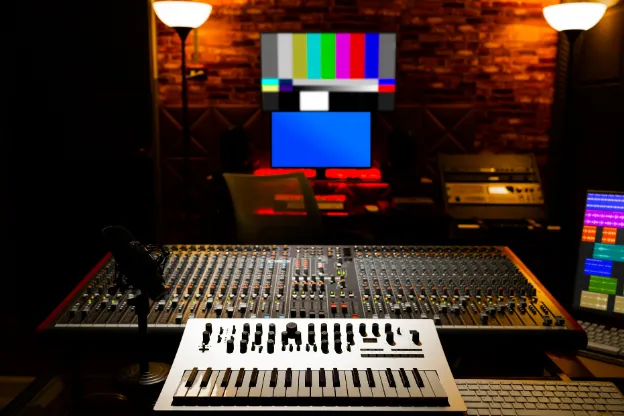
A recording studio is not just a room containing microphones and computers. The acoustic environment plays an important role in the quality of recorded and monitored audio. Students interested in professional recording should understand the difference between soundproofing and acoustic treatment.
Understanding these concepts can help aspiring producers make better recording and monitoring decisions.
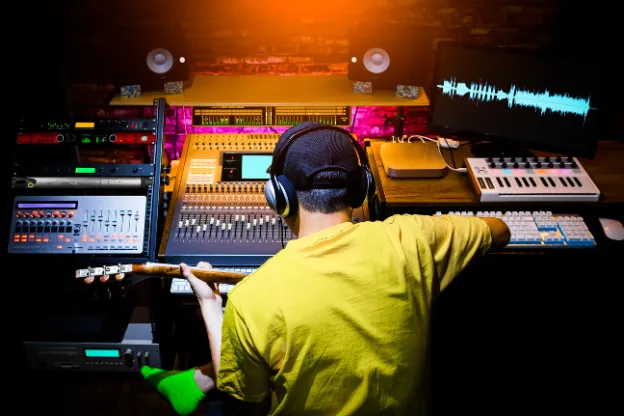
Music is an important part of advertising and brand communication. A suitable musical arrangement can help a commercial video create a memorable impression. Advertising agencies, production houses and digital marketing teams often require original audio for different types of campaigns.
Producers working in this field should understand how music supports a brand's message, target audience and visual identity.
Technical skills help you create music, but developing a recognisable creative identity can help you stand out in a competitive industry. Many producers gradually become known for a particular sound, genre, arrangement style or approach to music.
Developing a unique identity takes time, but consistent creative work can help producers build recognition and long-term professional relationships.
Music production is not always an individual activity. Many successful musical projects are created through collaboration between producers, singers, lyricists, composers and instrumentalists.A music producer needs to understand how to communicate creative ideas and work with different artists to develop a complete musical composition.
Continue practising, learn from constructive feedback, and keep your portfolio updated as you complete stronger projects. Final advice: You do not need to become an expert before taking the first step. Choose a direction, learn the fundamentals, complete practical work, and improve consistently. A structured learning process can help you move towards a career that matches your interests and abilities.
Becoming a music producer is about much more than learning how to operate music software. It is about understanding sound, developing musical ideas, experimenting with different instruments and creating something that people enjoy listening to. The journey begins with small steps. Learn the basics of music, understand a DAW, experiment with beats, practise recording and gradually develop your mixing and mastering skills. Do not worry if your first production does not sound like a professional album. Every experienced producer started somewhere. The difference comes from consistent practice, learning from mistakes and completing original projects. For students looking to enter the creative music industry, choosing a suitable Music Producer Course in Noida can be an important starting point. Explore different training options, understand their practical facilities and select a programme that matches your interests and career goals.
Join RSFI's industry-focused Music Production Course and explore Music Theory, Music Composition, Beat Making, Sound Design, Audio Recording, MIDI Programming, Digital Audio Workstations (DAW), Music Arrangement, Vocal Recording, Sound Engineering, Audio Editing, Equalisation (EQ), Mixing Techniques, Mastering, Synthesizers, Sampling, Background Score Production, Music for Films, Live Sound Production, Practical Music Projects, and Professional Music Production Workflows.
Explore Music ProductionCourseTalk to the RSFI admissions team to learn about course options and admission details.
Apply Now🎭 Acting & Presentation
🎬 Filmmaking
📸 Cinematography
🎞 Animation & VFX
🎭 Advertising, PR & Events
🎵 Music Production
📷 Still Photography
🏠 Interior Design
👗 Fashion Design
View All Courses🎭 Short-Term Certificate Programs
🎬 Diploma Programs
💻 Online Programs
🎞 3-Year Diploma Programs
Explore ProgramsDiscover other creative and media-focused learning options at RSFI, including filmmaking, acting, cinematography, photography, animation and visual effects.
Browse ProgramsHave questions about eligibility, course duration or admissions? Connect with our team for guidance.
Enquire Now