Photography has become much more than a hobby. Today, photographs are used to tell stories, promote businesses, capture important moments, create fashion campaigns, document events, and produce visual content for films, websites, magazines, and social media. As brands and individuals increasingly depend on visual communication, photography offers several career paths for people who enjoy creativity and working with a camera.Photography institute in Noida
But where should you start? Do you need an expensive camera? Is a photography course necessary? How much does photography training cost in India? And which skills can help you become a professional photographer? This guide answers these questions and explains how to become a photographer in India in 2027, including the types of courses available, essential skills, career opportunities, and how to choose the right photography institute in Noida, Delhi, or Delhi NCR.
☝ Click any topic below to jump directly to that section.
Photography is the art of capturing light, moments, people, places, and ideas through a camera. However, professional photography involves much more than pressing a button. A photographer needs to understand composition, exposure, lighting, colour, perspective, timing, and the purpose behind every image. For example, a wedding photographer may need to capture emotional moments in changing lighting conditions. A fashion photographer must understand how lighting, poses, backgrounds, and styling work together. A product photographer needs to present an object clearly while making it visually appealing to potential customers.
A structured course can help beginners understand the technical side of photography, practise with equipment, receive feedback, and gradually develop their own visual style. The most important thing to understand is that professional photography is a skill you build over time. A camera can help you take a picture, but learning how to create a meaningful image takes practice, patience, and a willingness to improve.
The way people communicate has changed significantly. Businesses need product images for online stores, restaurants require photographs for menus and promotions, fashion brands need campaign visuals, and individuals regularly hire photographers for weddings, portraits, events, and personal projects.This creates different opportunities for people who can produce good-quality images and deliver professional service.
Photography can be a good career choice if you enjoy visual work and are willing to practise consistently. However, it is not an automatic route to a high income. Building a sustainable career requires a strong portfolio, technical ability, communication skills, reliability, and an understanding of the market. Before investing in expensive equipment or training, explore different photography styles and try a few practical projects to understand what interests you most
If you are wondering how to become a professional photographer, the best approach is to follow a clear learning process rather than trying to master everything at once. You do not need to become an expert in every photography genre. Start with the fundamentals, practise regularly, and gradually develop a specialisation.
These concepts form the foundation of photography. Once you understand them, you can make more deliberate creative decisions instead of relying entirely on automatic settings.
A formal qualification is not always compulsory for becoming a photographer. Many photographers develop their skills through independent learning, assisting professionals, workshops, and practical experience. However, a structured course can make the learning process easier, especially if you are a beginner who does not know where to start. The main advantage of professional training is that it can bring important concepts together in a planned sequence.
Before enrolling in a Professional Photographer Course, ask for details about the syllabus, class format, equipment access, project work, instructor experience, and total fees. Do not choose a course only because its advertisement promises a successful career. Choose one that offers a realistic learning path and opportunities to practise.
Students who have completed Class 12 can explore photography as a creative career without necessarily pursuing a traditional academic subject related to photography. The right course depends on your current skill level, career goals, available budget, and the amount of time you can dedicate to training.
Do not select a course based only on its name. Compare the actual curriculum and practical learning opportunities before making your decision.
A quality photography programme should help students understand both the technical and creative sides of the profession. Although every institute has its own curriculum, the following subjects are useful when evaluating a course.
When evaluating a Photography School in Noida, look for a curriculum that combines technical instruction, creative exploration, and meaningful practical work.
Photography includes many specialisations. You do not have to master all of them to build a successful career. Exploring different genres can help you identify which subjects you enjoy and which services may suit your local market.
Commercial photographers create images to support business and marketing objectives. Projects may include brand campaigns, corporate portraits, promotional materials, product launches, and advertising content. For students interested in professional opportunities, understanding the requirements of commercial clients can be as important as mastering camera settings.
Noida is part of the wider Delhi NCR region and offers access to businesses, educational institutions, production companies, advertising agencies, studios, and commercial markets. For students interested in visual media, this creates an environment in which they can explore different types of photography and look for practical experience.
A course's location is only one consideration. The teaching approach, curriculum, available equipment, instructor guidance, and opportunities to practise should also influence your decision.The right choice is not necessarily the most expensive institute. It is the programme that best matches your learning goals and provides clear value for the fees charged.
Searching online for the Best Photography Institute in Noida can produce many options, but advertisements alone cannot tell you whether a course is suitable. Use the following checklist to compare institutes before enrolling.
Taking time to ask these questions can help you make a more informed decision. Clarify exactly what these services involve. Career support does not guarantee employment, and you should not rely solely on placement claims when selecting a course.
Join the Photography Course in NoidaBoth locations can be worth considering. The best choice depends on the quality of the programme, your commute, budget, preferred specialisation, and practical learning requirements.
If you are considering the Best Photography Course in Delhi NCR, focus on the quality of learning rather than the location alone. A well-structured course with useful practical assignments may be a better fit than a more expensive programme that does not meet your needs.
Photography course fees can vary considerably depending on the institute, course duration, teaching format, equipment access, and specialisation. A short introductory workshop will generally have a different fee structure from an extended diploma programme. Because fees and course offerings change, it is important to request the latest official fee details from the institute before making a decision.
If your chosen course provides access to suitable equipment, you may be able to learn the fundamentals before making a major purchase. You can then select a camera based on your preferred specialisation, budget, lens requirements, and future work. Important: RSFI's current photography course fees, exact duration, and equipment arrangements should be confirmed directly with the institute. Do not rely on estimated prices when planning your admission.
Turn your passion for capturing moments into a professional career with the Photography Course in Noida. Learn camera operation, composition, lighting techniques, portrait photography, fashion photography, product photography, studio photography, exposure control, lens selection, and photo editing through practical projects and hands-on training. Develop your creative vision, master the art of capturing stunning photographs, and gain industry-ready skills for career opportunities in fashion, advertising, e-commerce, media, weddings, and commercial photography. Build your professional portfolio and explore exciting career paths as a professional photographer, fashion photographer, product photographer, portrait photographer, or studio photographer.
Book Now →Learning to operate a camera is only the beginning. Professional photographers also need observation, creative thinking, organisation, communication, and problem-solving skills.
Freelancers should understand pricing, written agreements, expenses, usage rights, and client expectations. These skills become increasingly important as your work grows from personal projects to paid assignments.
You do not need to own every professional accessory to begin learning photography. Start with the equipment you can access, understand its capabilities, and upgrade when your work requires it.
Start with essential equipment, practise regularly, and identify your limitations. If you later specialise in product photography, you may need different lighting equipment than someone who primarily photographs weddings or landscapes. Buy equipment according to your work, not simply because another photographer owns it.
A portfolio demonstrates what you can do. It helps potential clients understand your style, technical ability, and suitability for a particular assignment. For many aspiring photographers, building a portfolio is one of the most important steps between learning photography and finding paid work.
As your technical skills develop, replace weaker photographs with stronger work. Ask experienced photographers for constructive feedback and use it to identify areas for improvement. Your portfolio should reflect your current ability rather than simply document everything you have photographed.
A Photography Career in India can develop in different directions depending on your skills, interests, and preferred working style. Some photographers choose employment, while others work independently or combine photography with related creative services.
Some professionals combine photography with video production, short-form content, editing, or social media asset creation. These additional skills may be useful when clients need several types of visual content from one creative team. Before selecting a career path, explore the work involved, identify the skills required, and create relevant portfolio projects.
Photographer earnings in India vary considerably. There is no single salary or income figure that applies to everyone. Income depends on factors such as experience, specialisation, location, portfolio quality, employer, client budgets, workload, and the ability to secure regular assignments.
As you gain experience, you can refine your specialisation, improve your workflow, and explore more complex projects. It is important to distinguish between revenue and profit. A photographer who charges a large amount for a shoot may still have substantial expenses. Rather than relying on promises of a particular salary, focus on developing skills that clients value and building a professional reputation over time.
Develop professional photography skills with industry-focused training in Noida. Learn camera operation, lighting techniques, composition, portrait photography, fashion photography, product photography, studio photography, exposure control, lens selection, and photo editing through practical exercises and hands-on projects. Build your creative vision and professional portfolio while preparing for career opportunities as a professional photographer, fashion photographer, product photographer, portrait photographer, wedding photographer, or studio photographer across fashion, advertising, e-commerce, media, weddings, and commercial photography industries.
Book Now →Both freelance photography and full-time employment can provide valuable career experiences. The right option depends on your personality, financial situation, experience, and preference for independent or structured work.
There is no single correct route. Consider your financial needs, technical ability, existing portfolio, and comfort with client management before deciding. You can also combine approaches: work in a full-time role while gradually developing an independent portfolio, provided your employment terms allow it.
Finding the first client can feel difficult because you may have limited professional experience. The good news is that you can begin building relationships before you have an extensive portfolio.
Good communication and consistent delivery help establish trust. Respond to enquiries professionally, arrive prepared, protect image files, meet agreed deadlines, and communicate early if a problem arises. Your reputation is built through both the photographs you create and the way you work with people.
Every photographer makes mistakes while learning. Recognising common problems can help you improve more efficiently.
Before photographing people, using private locations, or publishing client work, understand the relevant permissions and usage arrangements. Professional conduct protects both the photographer and the people involved.
| Skill | What You'll Learn |
|---|---|
| Introduction to Photography | Understand the fundamentals of photography, its history, different photography styles, visual storytelling, and the role of a professional photographer in today's creative industries. |
| Fundamentals of Camera Operation | Learn camera settings, exposure, focus, white balance, image resolution, shutter speed, aperture, and ISO to capture sharp, well-exposed, professional-quality photographs. |
| Camera Types, Lenses & Photography Equipment | Explore DSLR and mirrorless cameras, prime and zoom lenses, focal lengths, filters, tripods, reflectors, and essential photography equipment for different shooting requirements. |
| Exposure Control & Camera Settings | Develop a strong understanding of the exposure triangle, aperture, shutter speed, ISO, exposure compensation, and white balance to achieve accurate exposure and consistent image quality. |
| Photography Composition & Framing | Learn the rule of thirds, leading lines, symmetry, perspective, depth, negative space, and visual balance to create attractive, professional, and meaningful photographs. |
| Lighting Techniques for Photography | Explore natural and artificial lighting, soft and hard light, key and fill lights, backlighting, reflectors, diffusers, and professional lighting setups for different photography styles. |
| Portrait Photography & Posing Techniques | Learn portrait composition, subject positioning, posing, facial expressions, background selection, lens choices, and lighting techniques to capture engaging and professional portraits. |
| Lens Selection & Depth of Field | Understand how focal length, aperture, lens characteristics, and subject distance influence perspective, background blur, depth of field, and the overall appearance of a photograph. |
| Colour Theory & Visual Aesthetics | Understand colour psychology, colour combinations, contrast, white balance, colour harmony, and visual mood to create aesthetically appealing photographs for different creative projects. |
| Focus, Sharpness & Image Control | Learn autofocus modes, manual focus, focus points, subject tracking, depth of field, and techniques for capturing sharp images in portraits, products, events, and outdoor environments. |
| Fashion Photography & Model Shoots | Develop skills in fashion photography, model direction, posing, wardrobe coordination, lighting arrangements, creative concepts, and portfolio shoots for fashion brands and modelling assignments. |
| Product Photography & E-commerce Shoots | Learn product styling, background selection, lighting control, reflective surface management, shadow control, and composition techniques for e-commerce websites, catalogues, and commercial advertising. |
| Studio Photography & Lighting Setup | Gain practical knowledge of studio equipment, flash photography, softboxes, beauty dishes, reflectors, background systems, light positioning, and professional studio workflows. |
| Outdoor, Landscape & Nature Photography | Explore outdoor photography techniques, natural light, landscape composition, weather conditions, perspective, depth, and camera settings for capturing compelling nature and environmental photographs. |
| Wedding, Event & Candid Photography | Learn event coverage, candid photography, essential camera settings, low-light shooting, decisive moment capture, composition, and techniques for documenting weddings, celebrations, and special occasions. |
| Food, Lifestyle & Commercial Photography | Understand food styling, lifestyle photography, creative product arrangements, brand storytelling, lighting techniques, and visual composition for advertisements, restaurants, businesses, and commercial campaigns. |
| Flash Photography & Advanced Lighting | Learn built-in and external flash operation, flash exposure, off-camera flash, bounce flash, high-speed sync, light modifiers, and advanced lighting techniques for indoor and outdoor shoots. |
| Photo Editing & Digital Image Processing | Develop photo-editing skills using professional editing software. Learn image selection, cropping, exposure correction, colour adjustments, retouching, skin tone correction, and image enhancement. |
| RAW Processing, Colour Correction & Retouching | Understand RAW image processing, white balance correction, highlight and shadow recovery, colour grading, skin retouching, sharpening, noise reduction, and professional image finishing. |
| Practical Photography Exercises & Projects | Gain hands-on experience through camera exercises, portrait sessions, product shoots, lighting experiments, outdoor assignments, studio practice, and collaborative photography projects. |
| Photography Portfolio & Professional Presentation | Build a professional photography portfolio featuring portraits, fashion images, product photographs, studio work, and creative assignments to showcase your technical abilities and artistic vision. |
| Professional Career Preparation in Photography | Develop industry-relevant skills for career opportunities as a Professional Photographer, Fashion Photographer, Product Photographer, Portrait Photographer, Wedding Photographer, Studio Photographer, or Commercial Photographer across fashion, advertising, e-commerce, media, and creative industries. |
If you are searching for a Photography Institute in Noida, Ravi Sarin Film Institute (RSFI) is an option to explore when comparing creative education and photography training opportunities.Photography connects naturally with several areas of visual production, including filmmaking, cinematography, advertising, fashion, and video editing.
The appropriate combination depends on your career goals. You do not need to study every related subject to become a photographer.
Photography continues to evolve as technology, social media, and visual marketing change the way people create and consume images. For aspiring photographers, understanding current trends can help them explore new creative styles and identify potential areas of work.
Students looking for a Professional Photography Course should develop strong fundamentals while remaining open to new tools and techniques. Following trends can provide inspiration, but it is equally important to develop a distinctive style and create photographs that meet real client requirements.
Photography can develop into a business for people who want to work independently. However, running a photography business requires more than technical ability. You must also understand your customers, manage expenses, market your services, and deliver consistent results.
Reliable communication, clear agreements, consistent quality, and timely delivery can encourage repeat business. Over time, satisfied customers and professional referrals may help you expand your photography business. Starting small, learning from each assignment, and improving your services can be a practical approach to building a sustainable photography career.
Practical projects help beginners turn theoretical knowledge into useful experience. They also provide opportunities to experiment with different subjects and discover which photography styles they enjoy most.If you are attending Photography Classes in Noida or learning independently, try developing a few focused projects rather than taking random photographs without a clear objective.
For each project, select your strongest images and organise them into a clear sequence. You can also include a short explanation of the concept, lighting approach, and creative decisions behind the photographs. These projects can help you demonstrate your progress when applying for photography-related jobs, approaching clients, or developing your portfolio during a photography course.
Your first professional assignment can feel challenging because it involves working with real expectations, deadlines, and deliverables. Good preparation helps reduce mistakes and allows you to concentrate on creating strong photographs.
Keep the client informed about progress and communicate promptly if delays or unexpected issues arise. Professional behaviour builds trust and can be just as important as technical skill when establishing a long-term photography career.
Professional photography involves responsibilities towards clients, subjects, locations, and the photographs themselves. Understanding these responsibilities helps beginners develop professional habits from the start.
For paid assignments, document the scope of work, fees, payment terms, delivery timelines, cancellation arrangements, and image usage rights. Clear agreements help prevent misunderstandings and establish expectations for everyone involved. Learning these responsibilities alongside camera techniques can help you become a more reliable and professional photographer.
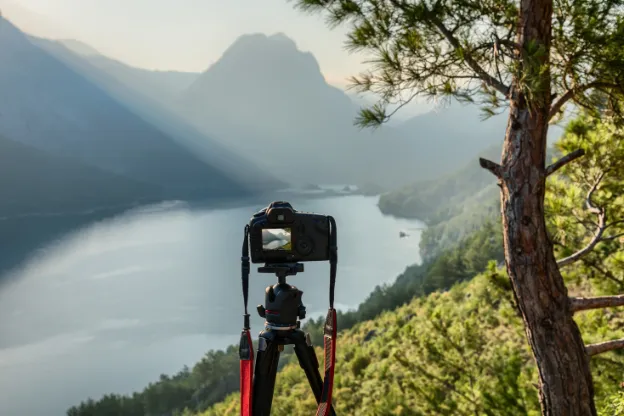
Choosing a camera is an important step for anyone planning to pursue photography professionally. However, beginners often assume that buying an expensive camera will automatically produce better photographs. In reality, understanding the equipment and knowing how to use it are equally important.
Not always. Ask your chosen Photography Institute in Noida whether suitable equipment is available for practical sessions. If you can practise with institute equipment, you may be able to make a better-informed purchase after understanding your preferred photography specialisation. The goal is not to own the most expensive camera. It is to learn how to use your equipment effectively and produce photographs that meet your objectives.
Lighting is one of the most important elements of photography. It affects the appearance of a subject, the mood of an image, the visibility of details, and the overall visual quality. photographer who understands lighting can create different results using the same camera and subject. For students exploring a Professional Photography Course, learning how to observe and control light is an essential part of developing technical ability.
These exercises help you understand how lighting affects the final photograph. When comparing Photography Classes in Noida or Delhi NCR, look for programmes that include practical lighting exercises rather than relying entirely on classroom explanations.
One of the biggest concerns for beginners is the cost of starting photography. Cameras, lenses, lighting equipment, editing computers, and studio rentals can require a substantial investment.However, you do not need to purchase a complete professional setup before beginning to learn. A more practical approach is to develop your skills gradually and invest in equipment as your requirements become clearer.
Once you begin completing paid assignments, consider reinvesting part of your earnings in equipment that directly improves your work. You might upgrade a lens, purchase suitable lighting, improve your storage system, or invest in editing tools. A gradual approach can help you manage costs while building a Photography Career in India.
Choosing the right course is an important decision, especially if you are beginning your photography journey after Class 12 or planning to change careers. Before applying, take time to understand your interests, compare available programmes, and prepare questions for the admissions team.
Take the opportunity to compare programmes carefully before making a final decision. If you are considering Ravi Sarin Film Institute (RSFI), contact the institute directly to confirm current photography course availability, eligibility, curriculum, duration, fees, and admission details. A little research before enrolment can help you make a more confident and informed decision.
Becoming a photographer is not simply about owning a camera or learning a few editing techniques. It is about understanding light, developing an eye for composition, observing the world carefully, and learning how to communicate ideas through images. The journey usually begins with small steps: taking photographs, experimenting with different settings, studying the work of other photographers, and learning from mistakes. Over time, consistent practice can help you develop the technical knowledge and creative confidence needed to pursue photography professionally. If you are planning to study photography after Class 12, change careers, or develop a creative skill, compare available photography courses carefully. Look beyond promotional claims and focus on the curriculum, practical training, equipment access, fees, and opportunities to develop a portfolio.
Join RSFI's industry-focused Photography Course and explore Camera Operation, Camera Settings, Lens Selection, Exposure Control, Lighting Techniques, Photography Composition, Portrait Photography, Fashion Photography, Product Photography, Studio Photography, Wedding and Event Photography, Outdoor and Landscape Photography, Food and Lifestyle Photography, Flash Photography, Photo Editing, RAW Image Processing, Colour Correction, Image Retouching, Commercial Photography, Practical Photography Projects, and professional photography portfolio development.
Explore Photography CourseTalk to the RSFI admissions team to learn about course options and admission details.
Apply Now🎭 Acting & Presentation
🎬 Filmmaking
📸 Cinematography
🎞 Animation & VFX
🎭 Advertising, PR & Events
🎵 Music Production
📷 Still Photography
🏠 Interior Design
👗 Fashion Design
View All Courses🎭 Short-Term Certificate Programs
🎬 Diploma Programs
💻 Online Programs
🎞 3-Year Diploma Programs
Explore ProgramsDiscover other creative and media-focused learning options at RSFI, including filmmaking, acting, cinematography, photography, animation and visual effects.
Browse ProgramsHave questions about eligibility, course duration or admissions? Connect with our team for guidance.
Enquire Now