The way we watch movies, advertisements, web series, music videos, and digital content has changed dramatically over the past few years. Today, visual effects make impossible movie scenes look real, animation brings imaginary characters to life, and professional video editing transforms raw footage into stories that people love watching.Animation VFX and Video Editing Course in Noida
Students who want to enter this field can explore an Animation VFX and Video Editing Course in Noida, professional training programmes in Delhi NCR, or other suitable courses that offer practical learning opportunities.
☝ Click any topic below to jump directly to that section.
Animation, visual effects, and video editing are three related but different areas of the creative media industry. Although these fields often work together, each has its own responsibilities, tools, and career opportunities.
An animator may create the character's movements. A VFX artist may build the futuristic environment and combine digital elements with live-action footage. A video editor may arrange the shots, maintain the pace, and help create the final cinematic experience. The same production may also involve cinematographers, sound designers, colourists, directors, and other specialists. This is why students interested in filmmaking and digital content creation can benefit from understanding how animation, VFX, and editing work together.
Choosing a career is a significant decision, especially for students who want to work in a creative industry. Animation, VFX, and video editing offer several possible career paths, but success depends on developing relevant skills and understanding the requirements of the role you want to pursue.
An animator might produce product animations or short animated advertisements. A VFX artist might work on green-screen footage, compositing, cleanup, or other visual effects tasks. Freelancing offers flexibility, but it also involves finding clients, negotiating project requirements, managing revisions, meeting deadlines, and handling payments. Important: Learning software is only the beginning. Building a reliable portfolio, communicating professionally, and delivering consistent results are equally important.
If you enjoy creating characters, designing imaginary worlds, or bringing static objects to life, animation could be a suitable career direction. You do not need to master every animation technique at once. Start with the fundamentals and gradually develop a specialisation.
If you want to become a character animator, focus on character animation rather than filling your portfolio with unrelated graphic designs. If you want to work in motion graphics, demonstrate typography animation, transitions, and visually engaging compositions. Career tip: A focused portfolio with a few excellent projects is generally more useful than a large collection of unfinished or repetitive work.
Visual effects artists help filmmakers and content creators produce images that cannot be captured easily using traditional filming techniques. Their work may involve combining live-action footage with digital environments, removing unwanted objects, creating digital elements, or improving shots during post-production. If you are interested in filmmaking, digital compositing, and creating realistic visual illusions, VFX is worth exploring.
If a project involved teamwork, clearly identify the work you personally completed. Avoid including effects that look impressive only because of the original footage. Demonstrate the skills that are relevant to your target position. Remember: VFX careers often require patience and attention to detail. The ability to identify small visual inconsistencies can be just as important as knowing advanced software.
Students often consider these subjects together because they are used in the same industry. However, the daily work involved in each profession can be quite different.
If you enjoy creating characters and imaginary worlds, animation may be a good fit. If you enjoy solving visual problems and making impossible scenes believable, VFX may interest you. If you enjoy selecting shots, shaping stories, and working with existing footage, video editing may be the better starting point.
Software knowledge is important, but it is not the only requirement for a successful creative career.
Software, production techniques, and client expectations change. Successful professionals continue to practise, study new workflows, and refine their portfolios throughout their careers.
You do not need to learn every available application to enter the industry. Start with the software most relevant to your intended career and develop a deeper understanding of its practical uses.
Availability, licensing costs, system requirements, and industry preferences may change. Check current requirements before investing in software or computer hardware. If you want to explore animation, begin with a suitable 2D or 3D tool. If you are interested in VFX, first understand compositing fundamentals before moving into advanced production techniques. Learning one application thoroughly is generally more productive than switching between several tools without finishing projects.
Animation and VFX offer several potential career paths for students who develop the necessary technical and creative abilities.
The availability of opportunities varies by location, economic conditions, experience, portfolio quality, and specialisation.
Video editing is used across many types of media production, giving students several directions to explore.
Podcast editors may work with multiple camera angles, dialogue tracks, recorded interviews, titles, and promotional clips. This work can also overlap with audio editing and social media content production. Career tip: When selecting an editing specialisation, consider both your creative interests and the type of clients or employers you can realistically reach.
Join the Video Editor Course in NoidaVideo editing is used across many types of media production, giving students several directions to explore.
Podcast editors may work with multiple camera angles, dialogue tracks, recorded interviews, titles, and promotional clips. This work can also overlap with audio editing and social media content production. Career tip: When selecting an editing specialisation, consider both your creative interests and the type of clients or employers you can realistically reach.
The career scope of animation and VFX depends on the growth of individual industries, employer requirements, production budgets, and the skills available in the workforce. These technologies are used in entertainment, advertising, gaming, educational media, product visualisation, and other digital applications.
The long-term impact will vary across specialisations. For students entering the industry in 2027, a sensible approach is to learn the fundamentals of their chosen profession and understand how new tools can support their work. The key is not simply to learn a particular application. It is to develop the judgement and practical ability needed to produce good work. Animation VFX and Video Editing
Turn your creativity and passion for visual storytelling into a professional career with the Animation, VFX & Video Editing Course in Noida. Learn 2D and 3D animation, visual effects (VFX), motion graphics, video editing, compositing, color grading, special effects, and professional editing techniques through practical projects and hands-on training. Develop your creative vision, master industry-relevant software, and gain practical skills for career opportunities in films, television, advertising, digital media, OTT platforms, gaming, and content creation. Build your professional showreel and explore exciting career paths as an animator, VFX artist, video editor, motion graphics designer, compositing artist, or visual effects specialist.
Book Now →Students searching for an Animation VFX and Video Editing Course in Noida often want to understand which skills to learn, how long training may take, and whether they should study all three subjects together.Noida is one of the locations in the Delhi NCR region where students can explore creative education and media-related training.
Not every course includes all these subjects, and the depth of training can vary considerably. Ask for a detailed curriculum before making a decision. A practical programme should give students opportunities to work on assignments, receive feedback, correct mistakes, and improve their output.
An Animation and VFX Course in Noida may be suitable for students who want to focus on creating digital imagery, animated sequences, and visual effects. However, animation and VFX are broad disciplines, so the course structure matters.
A short introductory programme may provide an overview of selected tools and techniques, while a longer course can allow more time for foundational learning, advanced practice, and portfolio development. The time you need also depends on your previous experience and the amount of practice you complete outside class. When comparing programmes, look at the number of practical projects, instructor feedback, curriculum depth, and expected learning outcomes rather than duration alone.
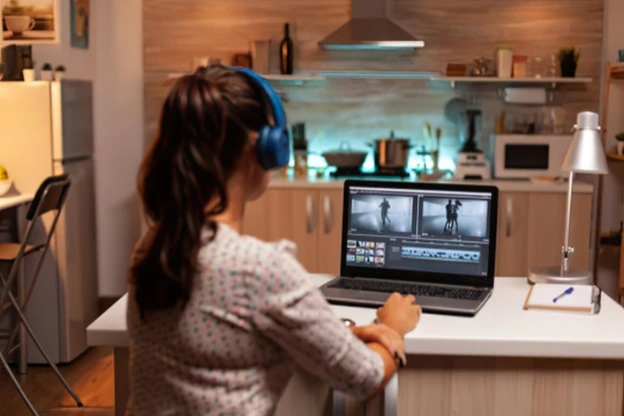
A Video Editing Course in Noida can help students develop the technical and creative skills needed to edit different types of video content. Before choosing a programme, consider what you want to produce.Editing a short social media video requires a different level of storytelling and production knowledge from editing a documentary or feature film.
Learn to remove unnecessary pauses, organise the footage, maintain continuity, and make the dialogue clear. Next, edit a promotional video, a vertical social media clip, or a short narrative sequence. As you gain confidence, practise more demanding projects that require stronger storytelling, sound design, and colour consistency.
Searching for an Animation Institute in Noida will introduce you to different training providers, courses, and learning formats. Instead of choosing an institute based only on advertising, compare the practical value of its programme.
Compare travel time, class schedules, available facilities, and online or offline learning options. A convenient learning arrangement can make it easier to maintain a consistent practice routine. The best animation institute for you is the one whose teaching approach, practical training, curriculum, and support match your goals and circumstances.
If you are searching for a VFX Institute in Noida, start by identifying the type of work you want to learn. A programme focused on basic compositing may differ significantly from one that teaches 3D modelling, simulation, lighting, and advanced visual effects. Check the VFX Curriculum
The curriculum should explain which subjects are taught at introductory, intermediate, and advanced levels.
Develop professional skills with industry-focused training in Animation, VFX & Video Editing in N**oida. Learn 2D and 3D animation, character design, motion graphics, visual effects, compositing, video editing, CGI, 3D modelling, texturing, rendering, and colour grading through practical exercises and hands-on projects. Build your creative vision and professional portfolio while preparing for career opportunities as a 3D animator, VFX artist, video editor, motion graphics designer, compositing artist, 3D modeller, or animation artist across film production, television, OTT platforms, advertising, gaming, and digital media industries.
Book Now →A Professional Video Editing Course in Noida may be appropriate for students who want to move beyond basic cutting and develop a more complete understanding of post-production. Professional editing involves technical accuracy, creative judgement, organisation, and the ability to work within project requirements.
Others start directly with VFX or animation because they already know which specialisation interests them. If your goal is to become a VFX artist, learning basic editing can still help you understand how visual effects fit into a finished production. The right starting point depends on your career objective and current skill level
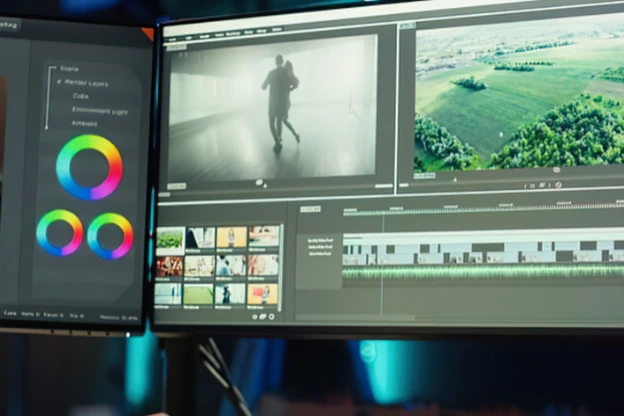
Students who search for an Animation and VFX Course in Delhi NCR may be comparing training options across Noida, Delhi, Ghaziabad, and other parts of the region. The broader search gives you more choices, but it also makes careful comparison more important.
Noida is part of Delhi NCR and has educational institutions and businesses operating in different areas of media, technology, and digital services. However, the suitability of a particular institute depends on its actual facilities, teaching quality, curriculum, and practical opportunities.
Finding the Best Video Editing Course in Delhi NCR starts with understanding what you want to achieve. A student interested in films may need different training from someone who wants to edit social media advertisements or YouTube videos.
A low fee does not necessarily mean poor training, and a high fee does not automatically guarantee quality. Compare the curriculum, teaching approach, facilities, project opportunities, and additional costs before deciding.
| Skill | What You'll Learn |
|---|---|
| Introduction to Animation, VFX & Video Editing | Understand the fundamentals of animation, visual effects, and video editing, including their history, creative applications, production workflows, and importance in films, television, OTT platforms, advertising, and digital media. |
| Fundamentals of Animation | Learn the principles of animation, including squash and stretch, anticipation, timing, spacing, follow-through, overlapping action, and staging to create realistic, expressive, and engaging animated sequences. |
| Introduction to 2D Animation | Explore 2D animation techniques, character movement, frame-by-frame animation, keyframes, in-betweening, backgrounds, and scene composition to develop animated characters and visual stories. |
| 3D Animation & Character Movement | Understand 3D animation workflows, character movement, body mechanics, walk cycles, facial expressions, keyframe animation, and motion refinement to create believable animated characters and scenes. |
| 3D Modelling & Object Creation | Learn 3D modelling techniques to create characters, props, environments, and objects for animation, films, games, advertisements, and visual effects projects. |
| Texturing, Materials & Shading | Explore texture mapping, material creation, surface details, shaders, UV mapping, and realistic material properties to improve the appearance and visual quality of 3D models and environments. |
| Lighting, Rendering & Scene Setup | Learn 3D scene lighting, light sources, shadows, reflections, camera placement, rendering settings, and output optimisation to produce visually appealing animation scenes and professional-quality renders. |
| Character Design & Digital Sculpting | Understand character development, shape language, proportions, anatomy basics, digital sculpting, and visual detailing to create original characters for animation, films, gaming, and creative storytelling. |
| Rigging & Character Setup | Learn the fundamentals of 3D rigging, skeleton creation, joints, controllers, skinning, and deformation to prepare characters and objects for animation. |
| Motion Graphics & Kinetic Typography | Develop skills in motion graphics, animated typography, logo animation, transitions, graphic elements, and visual storytelling for promotional videos, advertisements, social media, and brand campaigns. |
| Introduction to Visual Effects (VFX) | Understand the fundamentals of visual effects, including practical and digital effects, compositing, green screen techniques, CGI, tracking, rotoscoping, and the integration of computer-generated elements into live-action footage. |
| Green Screen & Chroma Keying | Learn green screen removal, chroma key techniques, background replacement, edge refinement, spill suppression, subject isolation, and foreground-background integration for film, television, and digital content. |
| Compositing & Visual Integration | Explore compositing workflows, layers, masks, blending modes, colour matching, shadows, reflections, and visual integration to combine multiple elements into seamless and convincing final shots. |
| Rotoscoping, Masking & Object Removal | Learn rotoscoping, manual and automated masking, object isolation, motion-based selections, wire removal, and cleanup techniques used in professional visual effects and post-production workflows. |
| Motion Tracking & Camera Tracking | Understand 2D and 3D motion tracking, camera tracking, point tracking, planar tracking, and object tracking to integrate visual effects, titles, and CGI elements accurately into live-action footage. |
| CGI & 3D Visual Effects | Explore computer-generated imagery, particle effects, simulations, digital environments, 3D assets, and the integration of CGI into film sequences, advertisements, music videos, and digital productions. |
| Video Editing Fundamentals | Learn video editing workflows, timeline management, footage organisation, trimming, cutting, sequencing, transitions, audio synchronisation, and storytelling techniques to create engaging and professional video content. |
| Advanced Video Editing Techniques | Develop skills in multi-layer editing, speed ramping, slow motion, jump cuts, match cuts, advanced transitions, timeline efficiency, and narrative editing for films, promotional videos, music videos, and social media content. |
| Colour Correction & Colour Grading | Understand exposure adjustment, white balance, contrast, colour balance, skin tones, cinematic colour grading, LUTs, and shot matching to achieve consistent and visually appealing video sequences. |
| Audio Editing & Video Synchronisation | Learn dialogue editing, sound effects placement, background music integration, audio synchronisation, noise reduction, volume balancing, and basic audio mixing to improve the quality of video productions. |
| Video Exporting & Delivery Formats | Understand video codecs, resolutions, frame rates, aspect ratios, compression, export settings, and delivery formats for films, OTT platforms, YouTube, Instagram, advertising campaigns, and other digital platforms. |
| Practical Projects & Industry Workflows | Gain hands-on experience through animation exercises, character animation, motion graphics, green screen projects, VFX compositing, video editing assignments, and collaborative production projects. |
| Portfolio Development & Showreel Creation | Build a professional portfolio and showreel featuring animation sequences, 3D models, motion graphics, VFX shots, compositing work, and edited videos to demonstrate your creative abilities and technical skills. |
| Career Preparation in Animation, VFX & Video Editing | Prepare for career opportunities as a 2D Animator, 3D Animator, VFX Artist, Video Editor, Motion Graphics Designer, Compositor, 3D Modeller, Character Animator, or CGI Artist across film production, television, OTT platforms, gaming, advertising, and digital media industries. |
Some students prefer to begin with introductory classes before committing to a longer programme. Searching for Animation Classes in Noida or a VFX Training Institute in Delhi NCR can help you explore different training formats.
Depending on your skills, you may explore internships, junior roles, trainee positions, assistant editing work, freelance projects, or collaborative productions. Read job descriptions carefully and apply for positions that match your current abilities. A portfolio cannot guarantee employment, but it can help employers and clients assess your practical skills more clearly.
Animation and VFX can be rewarding for people who enjoy visual storytelling, creative problem-solving, and learning technical tools. However, it is important to understand both the advantages and the challenges before committing to a career.
You may find this field interesting if you enjoy experimenting with visuals, learning software, solving problems, and completing projects. You should also be prepared to receive feedback and improve your work repeatedly. If you prefer work that requires little technical learning or rarely involves revisions, some roles in this industry may not match your expectations. The best way to evaluate your interest is to complete a few introductory projects before making a major financial commitment.
Many beginners spend considerable time learning software but struggle to convert that knowledge into practical results. Avoiding a few common mistakes can make your learning journey more effective.
Do not rely only on advertisements, promotional videos, or salary promises. Review the course structure, ask about practical training, and understand the terms of any placement support.
For students in Noida and Delhi NCR who are interested in filmmaking and digital media, Ravi Sarin Film Institute (RSFI) is an option to explore when researching creative education. Before selecting any programme, it is important to understand its curriculum, practical learning opportunities, course format, fees, and admission requirements.
Start by understanding the field, choosing a realistic learning goal, and practising the fundamentals. With consistent effort, constructive feedback, and a growing portfolio, you can make more informed decisions about your future in the creative media industry. Call to Action: Interested in exploring animation, VFX, or video editing training in Noida? Contact Ravi Sarin Film Institute to ask about available programmes, curriculum details, practical training, and admission options before making your decision.
Learning animation and VFX takes time, patience, and regular practice. The duration depends on your previous experience, the software you learn, the complexity of the projects you complete, and the type of career you want to pursue. Students who are new to digital media may need more time to understand the fundamentals before moving on to advanced techniques.
Consistent practice is more useful than trying to learn everything in a short period. Set aside regular time for practical assignments, review your mistakes, and seek feedback from instructors or experienced professionals. You should also choose a clear learning goal. Someone interested in becoming a video editor does not need to master every advanced 3D animation technique. Remember: Completing a course does not automatically make someone an expert. Your progress depends on the quality of your practice, the projects you complete, and your willingness to keep improving.
Video editing can be a promising career option for beginners who enjoy storytelling, visual communication, and working with digital content. Videos are used in films, web series, advertisements, interviews, educational content, and social media marketing.
Video editing can provide opportunities to develop further skills in film editing, colour grading, motion graphics, sound workflows, and post-production. Career growth depends on your experience, creative judgement, reliability, portfolio, and the type of projects you handle. Career tip: Start with manageable projects, develop a strong foundation, and gradually take on more challenging assignments as your abilities improve.
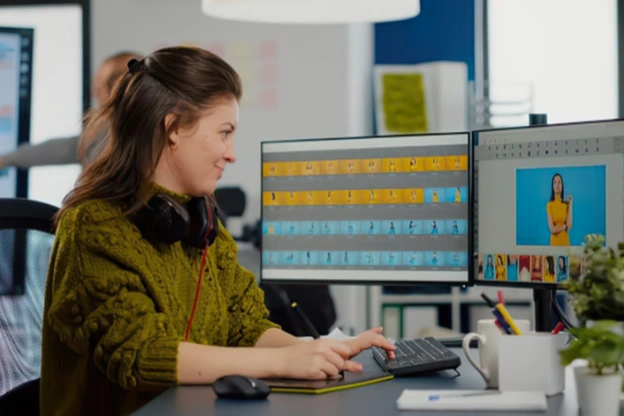
An animator and a VFX artist both contribute to visual storytelling, but their primary responsibilities are different. Animators focus on creating movement, while VFX artists create or enhance visual elements to produce images that may be difficult to capture using a camera alone.
However, professional-level expertise in either field requires dedicated practice. Which career should you choose? If you enjoy creating movement and characters, explore animation. If you prefer combining visual elements and making digital effects look realistic, consider VFX.
Yes, beginners can learn the fundamentals of animation, VFX, and video editing together. These subjects are closely connected in many production environments, particularly in filmmaking, advertising, digital content creation, and post-production.
Ask whether the programme covers all three subjects, how much time is devoted to each, which software is taught, and what projects students complete. Also check whether the course allows you to develop a portfolio in your preferred specialisation. The best learning strategy is to build a broad understanding of digital media, choose a clear career direction, and develop practical expertise through consistent project work.
Starting a career in animation, VFX, or video editing can feel confusing when you are unfamiliar with the industry. There are several software applications, different specialisations, and many types of courses to consider.Instead of trying to learn everything at once, follow a structured approach that helps you identify your interests, develop practical skills, and prepare for relevant opportunities.
Continue practising, learn from constructive feedback, and keep your portfolio updated as you complete stronger projects. Final advice: You do not need to become an expert before taking the first step. Choose a direction, learn the fundamentals, complete practical work, and improve consistently. A structured learning process can help you move towards a career that matches your interests and abilities.
Animation, VFX, and video editing offer different ways to turn creative ideas into visual experiences. From animated characters and cinematic visual effects to advertisements, music videos, and digital content, these skills are used across a wide range of production environments. However, choosing a creative career involves more than selecting a course or learning a software application. You need to understand the work, practise consistently, develop your technical abilities, and learn how to present your projects professionally. If you are beginning your journey in 2027, start by identifying the type of work you enjoy most. Explore animation if you want to create movement and bring characters or objects to life.Explore VFX if you enjoy digital compositing, visual problem-solving, and creating convincing visual illusions.
Join RSFI's industry-focused Animation, VFX & Video Editing Course and explore 2D Animation, 3D Animation, Character Design, 3D Modelling, Texturing, Rigging, Lighting and Rendering, Motion Graphics, Visual Effects, Green Screen Compositing, Rotoscoping, Motion Tracking, CGI, Video Editing, Advanced Editing Techniques, Colour Correction, Cinematic Colour Grading, Audio Synchronisation, Visual Storytelling, Practical Animation and VFX Projects.
Explore Animation, VFX & Video Editing CourseTalk to the RSFI admissions team to learn about course options and admission details.
Apply Now🎭 Acting & Presentation
🎬 Filmmaking
📸 Cinematography
🎞 Animation & VFX
🎭 Advertising, PR & Events
🎵 Music Production
📷 Still Photography
🏠 Interior Design
👗 Fashion Design
View All Courses🎭 Short-Term Certificate Programs
🎬 Diploma Programs
💻 Online Programs
🎞 3-Year Diploma Programs
Explore ProgramsDiscover other creative and media-focused learning options at RSFI, including filmmaking, acting, cinematography, photography, animation and visual effects.
Browse ProgramsHave questions about eligibility, course duration or admissions? Connect with our team for guidance.
Enquire Now