Music Production Course in Noida has become an increasingly popular search for students and aspiring artists who want to turn their interest in music into a professional skill. But before choosing a course, it is important to understand what music production actually involves.Music Production Course in Noida
Today, producing music is not limited to recording a singer in a studio. A modern music producer may be involved in creating a beat, developing a song arrangement, selecting instruments, programming MIDI, recording vocals, designing sounds, editing audio, mixing tracks and preparing music for final release.
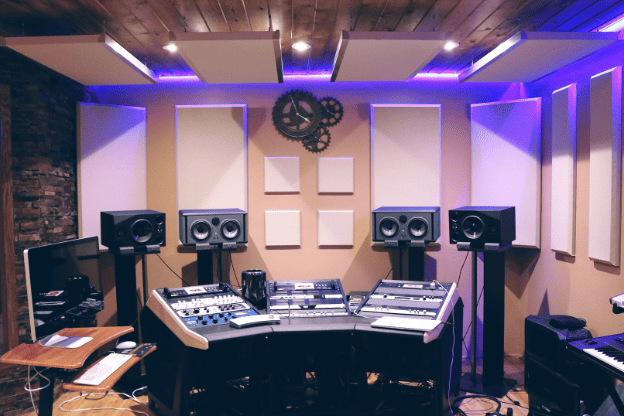
Music production is the process of turning a musical idea into a finished piece of music. The idea might start with a melody, a beat, a lyric, a chord progression, a sound or even a simple concept. The producer then helps develop that idea into a structured production.
A producer may also work closely with singers, composers, musicians, lyricists, filmmakers, directors and content creators. This is why a professional producer needs both creative judgement and technical understanding.
The way people consume music and audio has changed significantly. Earlier, music distribution was heavily dependent on physical albums, radio and television. Today, music can reach an audience through streaming services, social media, YouTube, films, OTT platforms, podcasts and digital advertising.
This means music production skills can be applied across several creative industries. For someone who enjoys both music and technology, it can be an exciting field to explore
For students living in Noida and nearby parts of Delhi-NCR, location is an important consideration. Noida has developed into a major hub for media, entertainment, technology, advertising and digital businesses. Its proximity to Delhi also gives students access to the larger NCR creative ecosystem. Choosing a music production course in Noida can therefore be convenient for students who want to study while remaining connected to the wider creative industry.
A good course should teach students how to actually produce music, rather than simply introducing them to software.
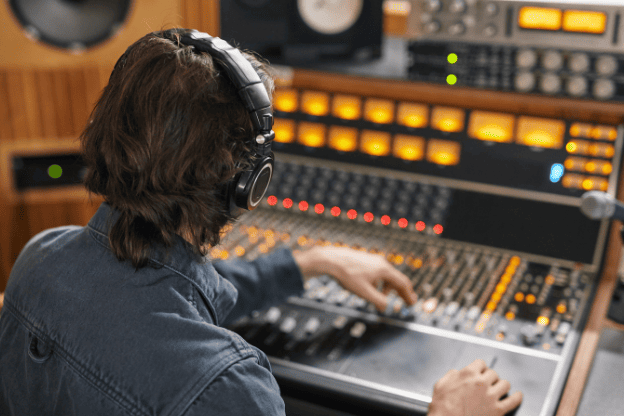
The role of a producer can change depending on the project. For one song, the producer may be responsible for creating the entire instrumental. For another project, the producer may work with an existing composition and focus on arrangement, sound selection and production. A producer may be involved in:
A good music production institute in Noida should provide a structured curriculum that covers both the creative and technical sides of production.
The objective is not simply to teach buttons and menus. Students should gradually understand why a particular production decision is being made.
You do not necessarily need to be an accomplished musician before starting music production. However, understanding basic music theory can make the production process much easier.
For example, understanding chord progressions can help a producer create more musical arrangements rather than relying entirely on trial and error. Music theory is therefore not about restricting creativity. It provides a framework that can help producers make better creative decisions.
Beat making is one of the most recognizable aspects of modern music production. But creating a beat is only the beginning. A producer also needs to understand how a track develops over time. A typical arrangement may include:
A great production can still sound weak if the recording is poor. Students therefore need to understand basic recording principles. This includes:
Vocal production is particularly important because vocals are often the central element of a song. Students can learn how to prepare vocal recordings, edit performances, correct timing and pitch where appropriate, and integrate vocals into the overall arrangement.
MIDI has transformed the way music can be created. Instead of recording every instrument physically, producers can use MIDI to control virtual instruments.
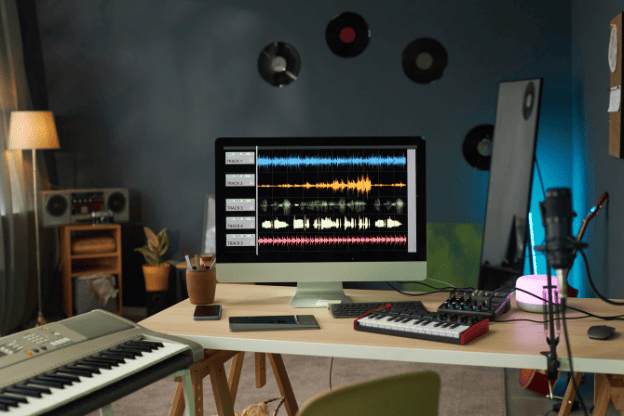
Students learn how to create and edit MIDI performances using a DAW and MIDI controller. This is particularly useful for producers who want to work independently without needing access to a complete collection of physical instruments.
Join the Career Opportunities After Music ProductionSound design is where technical knowledge and creativity often come together. Producers can create sounds from scratch or transform existing sounds into something completely different.
Sound design is useful not only in music but also in films, games, advertising and digital content. A producer with strong sound-design skills can create a distinctive sonic identity rather than relying only on preset sounds
Raw recordings are rarely ready to use immediately. Editing can involve:
Modern DAWs make these tasks much easier, but the producer still needs to know what should be changed and what should be left untouched. Over-editing can sometimes remove the natural character of a performance.
Explore professional Music Production training in Noida and learn essential skills such as music composition, beat making, sound design, audio recording, mixing and mastering, MIDI programming, music arrangement, vocal production, sampling, synthesizers, DAWs, studio techniques, sound editing, and practical music production projects with industry-focused training.
Book Now →A Digital Audio Workstation, commonly called a DAW, is at the center of modern music production. Depending on the training program, students may work with platforms such as:.
A professional platform used for composition, recording, editing, MIDI, mixing and music production. Other plugins and tools may also be introduced depending on the curriculum. However, students should remember one important thing:
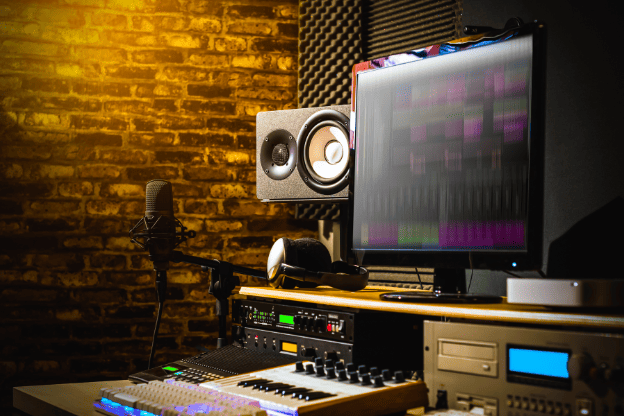
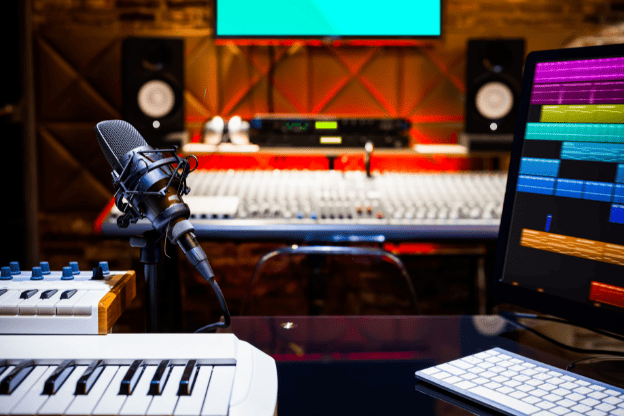
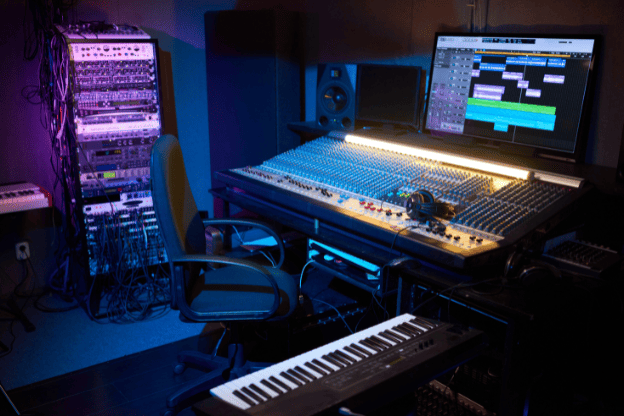
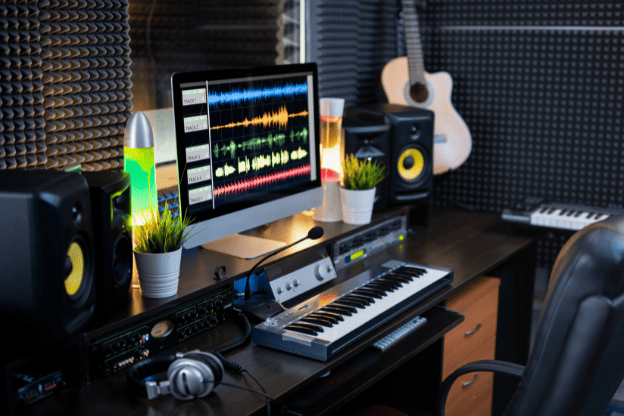
A professional music production environment can include various pieces of equipment.
Students should get opportunities to understand how these components work together. Learning signal flow, monitoring and basic studio setup is especially useful for anyone who plans to work professionally.
The two fields overlap, but they are not exactly the same. A music producer is generally more involved in the creative direction of a musical project. An audio engineer is generally more focused on the technical aspects of recording and audio processing.
In professional environments, one person may perform both roles, especially in independent music production.
One of the major advantages of studying music production is the variety of possible career directions. Depending on your skills and interests, you can explore roles such as:
Work independently with artists, agencies, filmmakers and content creators.
Freelancing is an important part of today's creative economy. A music producer can work with clients remotely or from a studio.
However, freelancing requires more than production skills. You also need to understand communication, pricing, deadlines, file management, revisions and client relationships.
A certificate can show that you completed a course. A portfolio can show what you can actually do. This is why portfolio development should be an important part of your learning journey.
Rather than uploading everything you create, select your strongest work. A smaller portfolio with high-quality productions can often communicate your ability better than a large collection of unfinished tracks.
Explore professional Music Production training in Noida and learn essential skills such as music composition, beat making, sound design, audio recording, mixing and mastering, MIDI programming, music arrangement, vocal production, sampling, synthesizers, DAWs, studio techniques, sound editing, and practical music production projects with industry-focused training.
Book Now →When students search for the best music production course in Noida, they often compare fees and duration first. Those are important, but they should not be the only factors.
Music production is a skill that develops through repetition. You can read about compression for hours, but hearing how compression changes a vocal is a different experience. You can watch tutorials about EQ, but identifying unwanted frequencies in a real recording requires practice.
A music production institute in Noida should therefore focus on application, not just theory.
Classroom learning provides fundamentals. Industry exposure shows students how those fundamentals are applied professionally. Workshops and interactions with working professionals can help students understand:
For students entering a competitive creative industry, this exposure can be valuable in understanding what happens beyond the classroom.
| Skill | What You'll Learn |
|---|---|
| Introduction to Music Production | Understand the fundamentals of music production, music industry, production workflow, different music genres and the role of a music producer in the modern music industry. |
| Music Production Principles & Elements | Learn essential elements of music such as rhythm, melody, harmony, tempo, dynamics, song structure and arrangement to create engaging musical compositions. |
| DAWs & Digital Audio Workstations | Develop practical skills in professional Digital Audio Workstations (DAWs), including recording, editing, arranging, MIDI programming and managing complete music production sessions. |
| Sound Design & Synthesis | Learn sound design techniques, synthesizers, sampling, oscillators, filters, effects and sound processing to create unique sounds, textures and musical elements. |
| Music Composition & Arrangement | Understand music composition, chord progressions, melodies, harmonies, song structures and arrangement techniques to develop complete and professional musical tracks. |
| Audio Recording & Editing | Learn professional audio recording techniques, microphone basics, vocal recording, instrument recording, audio editing, comping and noise reduction for high-quality productions. |
| Beat Making & MIDI Programming | Explore beat-making techniques, drum programming, MIDI sequencing, virtual instruments, groove creation and rhythm production for different music styles. |
| Mixing & Audio Processing | Learn professional mixing techniques including EQ, compression, reverb, delay, panning, automation and audio effects to create balanced and polished music tracks. |
| Music Production Techniques | Understand advanced production workflows, layering, sampling, vocal processing, creative effects and modern production techniques used in contemporary music. |
| Mastering & Final Production | Learn the fundamentals of mastering, loudness, stereo imaging, final audio processing and preparing music tracks for streaming platforms, digital release and professional distribution. |
| Practical Music Production Projects | Work on practical music production projects to gain hands-on experience in composition, recording, beat making, sound design, mixing and mastering. |
| Portfolio & Career Preparation | Build a professional Music Production portfolio and develop practical skills for careers as a music producer, beat maker, sound designer, recording engineer, mixing engineer and audio professional. |
For students looking for creative education in Noida, RSFI provides an environment where music production can be approached as part of the wider media and entertainment ecosystem.
At RSFI, students interested in the creative industry can explore music production alongside related areas of filmmaking and media. The objective should be to encourage students to develop practical skills, understand professional workflows and build confidence through project-based learning. For an aspiring producer, this broader creative environment can help develop an understanding of how music fits into film, video, advertising and digital storytelling.
A music production course can be suitable for a wide range of learners. You may consider the field if you are:
Curiosity, consistency and willingness to practice are often more important starting points. Students should always check the specific eligibility requirements of the course they plan to join.
Music production can be a rewarding career for people who genuinely enjoy music and are willing to continuously improve their skills.music production course in Noida remaining connected to the wider Delhi-NCR creative environment.
At RSFI, students interested in the creative industry can explore music production alongside related areas of filmmaking and media. The objective should be to encourage students to develop practical skills, understand professional workflows and build confidence through project-based learning.
A music production course can be suitable for a wide range of learners. You may consider the field if you are:
You do not have to already be a professional musician. Curiosity, consistency and willingness to practice are often more important starting points.
Music production can be a rewarding career for people who genuinely enjoy music and are willing to continuously improve their skills. But it is important to have realistic expectations. course alone cannot make someone a successful producer. Professional growth usually comes from a combination of:
The music industry is competitive, and building a career takes time. Students who treat production as a skill to develop rather than simply a certificate to obtain are more likely to build a meaningful long-term career.
If you are starting from zero, the journey can look something like this:
Music is no longer limited to films and albums. Today, music is everywhere. You hear original music in:
The growth of independent artists and online platforms has also made it easier for new producers to showcase their work. A person with strong production skills can work with singers, rappers, filmmakers, advertising agencies, content creators and independent artists.
Many beginners think a music producer simply creates beats. The role is much broader. A producer may be involved in the creative and technical stages of a song. Depending on the project, a producer may help decide:
A producer may start with an empty project and gradually build an entire musical arrangement. This combination of creativity and technology is one of the biggest attractions of music production.
Choosing a music production course in Noida is not simply about learning how to operate a software program. Music production is a combination of musical understanding, technology, creativity, listening and practical experience. The right training can help you understand the complete process — from creating an initial beat or melody to recording, arranging, editing, mixing and completing a final production. For students comparing a music production institute in Noida with a music production institute in Delhi, the most important question should be:
Join RSFI's industry-focused Music Production Course and master Music Composition, Beat Making, Sound Design, MIDI Programming, Audio Recording, Music Arrangement, Vocal Production, Mixing & Mastering, Sound Editing, DAW Techniques, and practical music production projects through hands-on, industry-focused training.
Explore Music Production Course🎭 Acting
🎬 Filmmaking
📸 Cinematography
🎞 Animation & VFX
🎭 Advertising, PR & Event
🎬 Music Production
📸 Still Photography
🏠 Interior Design
👗 Fashion Design
View Programs🎭 Short Term Program
🎬 Diploma Program
📸 Online Program
🎞 3 Years Diploma Programs
View ProgramsJoin RSFI's industry-focused Music Production Course and master Music Composition, Beat Making, Sound Design, MIDI Programming, Audio Recording, Music Arrangement, Vocal Production, Mixing & Mastering, Sound Editing, DAW Techniques, and practical music production projects through hands-on, industry-focused training.
Explore Music Production Course