Music has always been an important part of Indian culture, but the way music is created, recorded, produced and distributed has changed dramatically. Today, a song can begin with a simple idea on a laptop and eventually reach millions of listeners through streaming platforms, films, advertisements, social media and digital content.Music Production Course in Noida
For students based around the National Capital Region, a Music Production Course in Noida, Delhi or Delhi NCR can provide convenient access to a growing creative ecosystem while allowing learners to develop practical production skills.
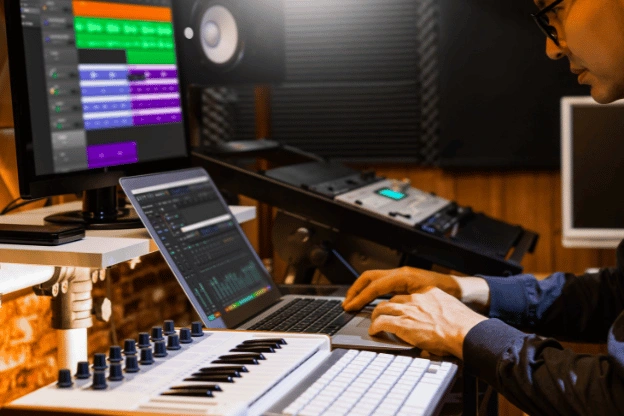
Music production is the complete creative and technical process involved in turning a musical idea into a finished recording.
A music producer may work on different stages of a project, depending on the production environment and their role. This can include developing an arrangement, selecting sounds, recording instruments and vocals, editing audio, programming beats, designing sounds, mixing and preparing the final track.
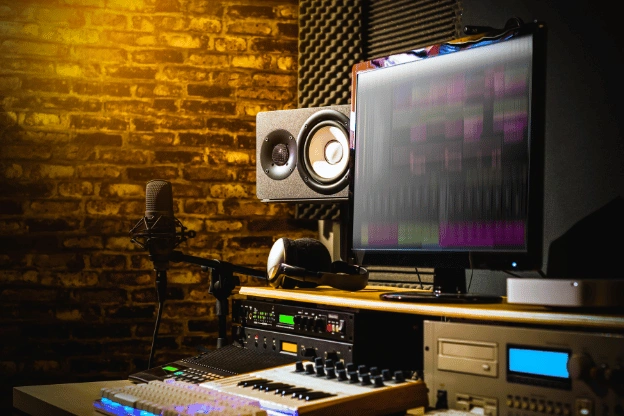
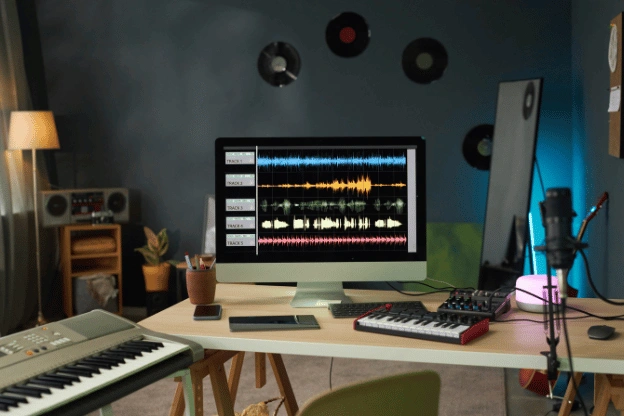
Modern music production is closely connected with technology. Producers commonly work with computers, microphones, audio interfaces, MIDI controllers, studio monitors and Digital Audio Workstations (DAWs).
However, music production is not simply about operating software.
A good producer needs to understand the relationship between creativity, musical ideas, recording and sound. They need to make decisions about rhythm, melody, harmony, arrangement, tone, dynamics and the overall emotional direction of a track.
The Indian music industry has expanded beyond traditional album releases and film music. Today, music is created for films, web series, independent artists, advertising campaigns, podcasts, games, YouTube videos, short-form content and live performances.
This expansion has made Music Production as a Career in India an attractive option for students with an interest in music and technology.
A person interested in music production can explore different professional directions. Some producers work with singers and independent artists, while others specialize in background scores, electronic music, advertising music, sound design or audio post-production.
There is also a growing independent creator ecosystem. Artists can record and release their own music without depending entirely on traditional music companies. This has created opportunities for producers who can help artists develop professional-sounding tracks.
A career in this field can therefore be flexible. You may work in a recording studio, production house, media company or advertising agency, or eventually work independently with your own clients.
Music production can be a good career choice for students who enjoy both creativity and technology. One of its biggest advantages is the variety of work available.
For example, someone may begin by learning beat production and later develop skills in recording, mixing, mastering and sound design. Another student may focus on songwriting and composition while using production skills to create professional demos.
India has a diverse music environment that includes Bollywood, regional cinema, independent music, devotional music, classical influences, hip-hop, electronic music, advertising and digital content.
This diversity creates opportunities for producers with different interests.
A producer working in Mumbai may have a different professional environment from someone working in Delhi NCR. Similarly, an independent hip-hop producer may follow a completely different workflow from a producer creating music for advertising or films.
Delhi NCR is particularly interesting for students because the region has a large ecosystem of media, advertising, entertainment, digital content and creative businesses.
Noida has also developed as an important media and production hub, making it a practical location for students who want to study music production while remaining close to Delhi and the wider NCR region.
For an aspiring student, the important thing is not simply the location of an institute. What matters is whether the learning environment provides practical exposure, experienced guidance, relevant equipment and opportunities to create a portfolio.
A Music Production Course in Noida can be a useful starting point for students who want structured training in modern music production. A good course should introduce students to the complete production workflow rather than focusing only on one software program. Beginners can start with fundamental concepts such as:
Students should ideally spend time creating actual tracks rather than only watching demonstrations. Working on different projects helps learners understand how production decisions change according to genre, artist, audience and purpose.
A Music Production Institute in Noida can therefore be valuable when it combines classroom concepts with hands-on studio work.
Students looking for the Best Music Production Course in Noida should compare the curriculum, practical sessions, faculty experience, studio facilities, project work and overall learning environment instead of choosing a course solely on the basis of advertising claims.
Delhi has a long-standing connection with music, performing arts, independent artists and creative communities.
A Music Production Course in Delhi can expose students to a diverse musical environment and provide opportunities to learn different styles of production.
Students can explore areas such as recording, composition, electronic music, hip-hop production, songwriting, sound design and mixing.
When comparing a Music Production Institute in Delhi, students should look at whether the institute provides practical learning and whether the course reflects current industry workflows.
A Best Music Production Course in Delhi should ideally help students progress from beginner-level concepts to complete production projects.
The course should not be limited to theoretical explanations. Music production is a hands-on discipline, so students need regular opportunities to work with software, microphones, MIDI instruments, audio interfaces and studio equipment.
Delhi NCR offers students access to a large and diverse creative ecosystem.
For students who live in Noida, Ghaziabad, Greater Noida, Delhi, Gurugram or nearby areas, a Music Production Course in Delhi NCR can be a convenient option.
The major benefit of studying in an active metropolitan region is exposure.
Students can potentially interact with musicians, singers, content creators, filmmakers, advertising professionals and other creative people.
A Best Music Production Institute in Delhi NCR should therefore focus on more than classroom lectures. Students should have opportunities to experiment, collaborate and create projects.
Similarly, Music Production Training in Delhi NCR should ideally include practical exercises covering the complete production cycle.
Similarly, Music Production Training in Delhi NCR should ideally include practical exercises covering the complete production cycle.
A comprehensive music production program can cover several interconnected areas. You do not necessarily need to be an expert musician before beginning a production course.
Mastering is the final stage of preparing a track for distribution. Students learn the fundamentals of loudness, dynamics, tonal balance and technical preparation.

Join the Music Production Course for BeginnersMany beginners jump between random online tutorials. One video teaches beat making, another teaches mixing and another focuses on a completely different DAW.
You first understand the fundamentals, then practice them, and gradually move toward complete projects. A beginner-focused course should explain concepts in simple language and provide enough practical work for students to build confidence.
Yes, music production can be explored as a career option after school, particularly for students who have a strong interest in music, technology and creative work. A Music Production Course After 12th in India can provide an opportunity to develop industry-oriented skills before entering professional work. Students from different academic backgrounds can explore the field. What matters more is genuine interest, willingness to practice and the ability to develop technical and creative skills.
The right program should help students build a foundation rather than promising instant success.
If you are wondering How to Start a Career in Music Production in India, the process should begin with learning the fundamentals.
Music technology continues to evolve. Successful producers continue experimenting with new techniques, sounds and workflows.
Build your career in Music Production with professional training in Noida. Learn essential skills such as Music Theory, Sound Design, Beat Making, MIDI Programming, Audio Recording, Mixing & Mastering, Sampling, Synthesizers, Vocal Recording, Music Arrangement, Digital Audio Workstations (DAWs), Sound Effects, Audio Editing, and Music Composition. Gain practical experience through hands-on music production projects and industry-focused training.
Book Now →If you are specifically searching for How to Become a Music Producer After 12th, there is no single route that everyone must follow. One practical route is: Class 12 → Music Production Training → Practical Projects → Portfolio → Collaboration → Freelance/Studio Work → Professional Growth
A formal course can provide structure, but personal practice remains essential. Students should spend time creating their own music instead of depending entirely on classroom exercises. Over time, they can develop a personal sound and professional identity.
Technical knowledge is important, but music production requires several other skills.
Different projects require different approaches. A producer should be able to adjust according to the artist, genre and project requirements.
Music production can lead to several career paths.
Some producers eventually create and release their own music while producing for others. The exact role depends on the individual's skills, interests and portfolio.
These roles can overlap, but they are not always identical.
A music composer primarily focuses on creating musical ideas, melodies, harmonies and compositions.
A music producer may work on the broader process of turning those ideas into a finished recording.
In modern independent music, one person may perform both roles.
For example, an artist could write a melody, create the arrangement, program drums, record vocals, mix the track and release it independently.
This is one reason why modern producers benefit from learning multiple areas of music creation.
One of the most important factors when choosing a course is practical exposure. Music production cannot be mastered simply by reading about it. Students need to open a DAW, create tracks, make mistakes, listen critically, correct those mistakes and repeat the process. Practical Music Production Training in Noida or Delhi NCR can help learners become familiar with the workflow used in actual production environments.
The more projects a student completes, the easier it becomes to understand how different production techniques work together.
The future of music production is connected to the wider growth of digital media. Music is no longer consumed only through albums and traditional radio. It is part of streaming platforms, films, web content, advertisements, podcasts, gaming, social media and independent creator platforms. This means audio skills can be useful across multiple industries. The scope of music production can therefore extend beyond becoming a traditional studio producer.
Technology will continue to change the tools producers use, but fundamental skills such as musical understanding, critical listening, arrangement and creative decision-making will remain important.
Build your career in Music Production with professional training in Noida. Learn essential skills such as Music Theory, Sound Design, Beat Making, MIDI Programming, Audio Recording, Mixing & Mastering, Sampling, Synthesizers, Vocal Recording, Music Arrangement, Digital Audio Workstations (DAWs), Sound Effects, Audio Editing, and Music Composition. Gain practical experience through hands-on music production projects and industry-focused training.
Book Now →Choosing a course should not be based only on phrases such as “best” or “professional.” Students should evaluate the actual learning experience. When comparing a Music Production Institute in Noida, Delhi or Delhi NCR, consider
Does the institute provide opportunities to understand professional workflows? These factors are more meaningful than choosing an institute simply because it claims to be the Best Music Production Institute in Delhi NCR.
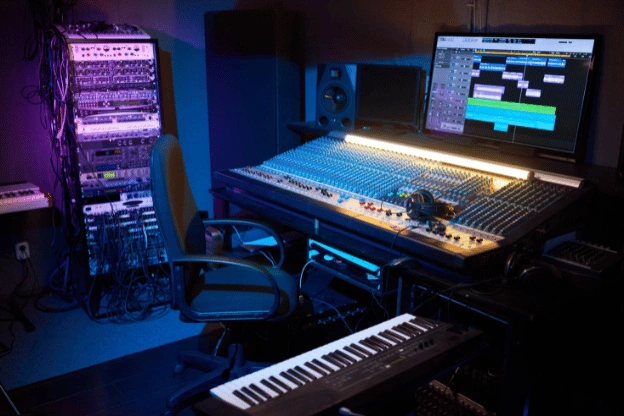
A portfolio is one of the most valuable assets for an aspiring producer. Instead of simply telling someone that you understand music production, your portfolio allows them to hear what you can actually create./p>
Five strong projects can communicate your abilities better than twenty unfinished tracks. As your skills improve, continue replacing older work with stronger productions.
Constructive feedback can help producers identify weaknesses they may not hear themselves.
| Skill | What You'll Learn |
|---|---|
| Introduction to Music Production | Understand the fundamentals of music production, the role of a music producer, the music production workflow, and the importance of creativity and sound in films, advertising, gaming and digital media. |
| Music Theory & Fundamentals | Learn essential music theory concepts including notes, scales, chords, rhythm, melody, harmony, tempo, time signatures and song structure. |
| Digital Audio Workstations (DAWs) | Learn professional DAWs and understand project setup, tracks, recording, editing, arranging, plugins, effects and complete music production workflows. |
| Beat Making & Rhythm Programming | Develop skills in beat making, drum programming, rhythm patterns, grooves, percussion arrangement and creating engaging beats for different music genres. |
| MIDI Programming & Virtual Instruments | Learn MIDI sequencing, piano roll editing, virtual instruments, synthesizers, samplers and programming musical parts for professional productions. |
| Audio Recording & Vocal Production | Understand microphone techniques, audio recording, vocal tracking, recording setup, vocal editing and techniques for capturing clean and professional audio. |
| Sound Design & Synthesis | Explore sound design, synthesizers, sampling, sound creation, modulation, effects processing and developing unique sounds for music and digital media. |
| Music Arrangement & Composition | Learn music composition, song arrangement, melodies, chord progressions, instrumentation, transitions and structuring complete musical compositions. |
| Audio Editing & Processing | Develop skills in audio editing, cutting, timing, noise reduction, pitch correction, audio cleanup and processing techniques for professional music production. |
| Mixing Techniques | Learn professional mixing techniques including EQ, compression, reverb, delay, panning, automation, balancing and creating clarity and depth in a mix. |
| Mastering & Final Audio Production | Understand mastering fundamentals, loudness, dynamics, stereo imaging, final processing and preparing music for streaming, digital platforms and commercial release. |
| Music Production for Film & Media | Learn how music, background scores, sound effects and audio elements are created and integrated for films, advertisements, web content, gaming and digital media. |
| Practical Music Production Projects | Gain hands-on experience through beat-making exercises, music compositions, recording sessions, sound design, mixing, mastering and industry-focused music production projects. |
| Portfolio & Career Preparation | Build a professional Music Production portfolio and develop practical skills for careers as a music producer, composer, sound designer, recording engineer, mixing engineer and audio professional. |
Music production and traditional music education are related, but they focus on different areas.
Traditional music education may concentrate more on vocal training, instrumental performance, music theory and classical techniques. Music production, on the other hand, combines musical knowledge with recording technology, digital instruments, sound design and audio processing.
This makes music production particularly relevant for students who want to work with modern digital music.
A student does not necessarily have to choose between musical knowledge and technology. In fact, understanding both can create a stronger foundation.
For example, knowing basic rhythm and harmony can help when programming drums or creating chord progressions, while understanding recording and mixing can help turn a musical performance into a polished final track.
This combination of music + technology + creativity is one of the reasons a professional music production course can be valuable for today's learners.
echnology has transformed almost every stage of music creation.
In the past, recording a professional song generally required access to a large recording studio with expensive equipment.best Music productions Institute in Noida,Digital Audio Workstations have become central to modern production. Producers can record, edit, arrange and mix multiple tracks within the same project.
Technology has also made experimentation easier.
A producer can try different drum patterns, change arrangements, manipulate samples, experiment with synthesizers and process vocals without having to recreate an entire recording session.
Artificial intelligence and other emerging technologies are also influencing creative workflows. However, technology does not replace musical judgment. Producers still need to understand what sounds appropriate for a particular song and how different elements should work together.
For students pursuing a Music Production Career in India, learning fundamental production principles is therefore more important than simply following the latest software trend.
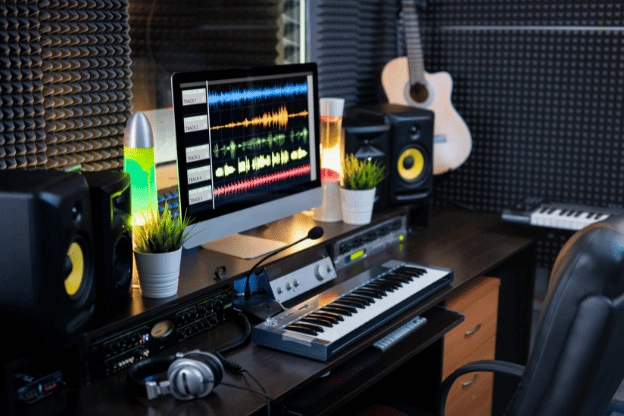
Not every music producer has to follow a traditional studio-based career. Freelancing has become an important option for creative professionals. A freelance producer may work with independent singers, rappers, YouTubers, filmmakers, advertising agencies, content creators and other clients. The nature of freelance work can vary significantly. One client may need a complete song production, while another may need an instrumental, vocal editing, background score or mixing service.
Independent music has also changed the way artists approach production. Many artists now write, record and release music independently, creating opportunities for producers who can collaborate with them throughout the process. This makes a Music Production Course in Noida for Career development particularly useful for students who want to understand both creative production and professional workflows.
Learning music production is only the beginning. Building a sustainable career requires continuous development.
Start by choosing an area that genuinely interests you.
You could focus on beat production, songwriting and production, recording, mixing, electronic music, film scoring, sound design or another specialization.
Once you have identified your direction, create projects consistently.
Do not wait for perfect equipment before starting. Learn to make the most of the tools available to you and focus on developing your ears and production skills.
A useful progression can look like this:
Learn → Practice → Create → Get Feedback → Improve → Collaborate → Build Portfolio → Find Opportunities
Networking is another important part of the journey.
Connect with singers, musicians, filmmakers, lyricists, content creators and other producers. Collaboration can introduce you to new styles while also expanding your professional network.
Most importantly, keep improving.
The music industry changes continuously, and producers who remain curious and adaptable are better positioned to respond to new technologies, genres and creative opportunities.
Before enrolling, students should have realistic expectations. A professional course should not be viewed as a shortcut to instant success. Instead, it should provide a structured environment where students can develop the knowledge and practical habits required for production.
At the beginning, a student may struggle to create a complete track. With regular practice, they can learn to build arrangements, record vocals, edit audio, create beats, mix tracks and eventually complete independent projects. This is why students comparing Music Production Classes in Noida, Delhi or Delhi NCR should look carefully at the practical component of each program. A course becomes much more valuable when students are encouraged to actually produce music instead of simply watching someone else produce it.
Before choosing a course, ask yourself a few simple questions.
Does the course cover the complete production workflow?
Look for a curriculum that covers production fundamentals, recording, editing, arrangement, mixing and other relevant areas.
Is there enough practical training?
Music production is a practical discipline, so hands-on work should be an important part of the program.
Will I create a portfolio?
Projects completed during training can become useful examples of your skills.
Are the instructors experienced?
Look for educators who can explain both concepts and practical workflows.
Is the learning environment suitable for beginners?
If you are new to production, the course should explain concepts progressively.
Does the course match my career goals?
Someone interested in independent music may need a different focus from someone interested in film scoring or audio production for digital media.
Can I receive feedback?
Constructive feedback can accelerate learning by helping you identify areas that need improvement.
A careful comparison is much more useful than choosing a course simply because it is marketed as the Best Music Production Course in Noida or the Best Music Production Course in Delhi.
The right choice is the program that matches your goals, learning style and career direction.
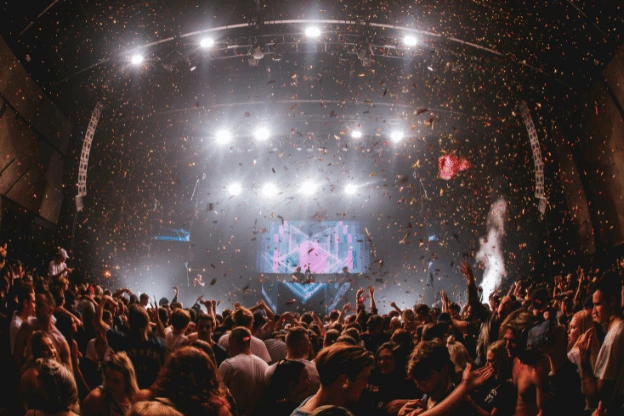
A portfolio is one of the most valuable assets for an aspiring producer. Instead of simply telling someone that you understand music production, your portfolio allows them to hear what you can actually create.
Music production is no longer limited to traditional recording studios. Technology has made it possible for producers to create, edit, arrange and release music from highly flexible digital environments.
For students considering Music Production as a Career in India, the most important step is to develop a strong foundation and then keep practicing.
A professional Music Production Course in Noida, Delhi or Delhi NCR can provide structure, guidance and practical exposure, but long-term success depends on what students do with that knowledge.
If you are starting after Class 12, focus first on understanding music production fundamentals. Learn your DAW, develop your listening skills, experiment with different genres, complete projects and gradually build a portfolio.
Do not focus only on collecting certificates. Focus on creating music.
The strongest producers are usually those who combine musical understanding, technical knowledge, creativity, consistency and professional discipline.
Whether your goal is to work as a studio producer, create independent music, produce beats, work in advertising and digital media, collaborate with artists or eventually establish yourself as an independent producer, the journey begins with learning the fundamentals and consistently turning ideas into finished work.
Join RSFI's industry-focused Music Production Course and master Music Theory & Fundamentals, Digital Audio Workstations (DAWs), Beat Making & Rhythm Programming, MIDI Programming & Virtual Instruments, Audio Recording & Vocal Production, Sound Design & Synthesis, Music Arrangement & Composition, Audio Editing & Processing, Mixing Techniques, Mastering & Final Audio Production, Music Production for Film & Media, and practical music production projects through hands-on, industry-focused training.
Explore Music Production Course🎭 Acting
🎬 Filmmaking
📸 Cinematography
🎞 Animation & VFX
🎭 Advertising, PR & Event
🎬 Music Production
📸 Still Photography
🏠 Interior Design
👗 Fashion Design
View Programs🎭 Short Term Program
🎬 Diploma Program
📸 Online Program
🎞 3 Years Diploma Programs
View ProgramsJoin RSFI's industry-focused Music Production Course and master Music Theory & Fundamentals, Digital Audio Workstations (DAWs), Beat Making & Rhythm Programming, MIDI Programming & Virtual Instruments, Audio Recording & Vocal Production, Sound Design & Synthesis, Music Arrangement & Composition, Audio Editing & Processing, Mixing Techniques, Mastering & Final Audio Production, Music Production for Film & Media, and practical music production projects through hands-on, industry-focused training.
Explore Music Production Course