Have you ever watched a movie and wondered how a simple idea became a complete story on the screen?
Behind every memorable film, web series, advertisement, music video or short film, there is a team of creative people working together. Someone develops the story, someone writes the screenplay, a director brings the vision together, cinematographers create the visual language, editors shape the final story, and sound professionals make the experience feel real.Filmmaking course in Noida
For people who love movies, storytelling, cameras, creativity and visual communication, joining a filmmaking course can be a practical way to understand how the film industry actually works.Filmmaking is not only about learning how to operate a camera. It is a combination of storytelling, direction, cinematography, editing, sound, production, acting, visual design and teamwork.
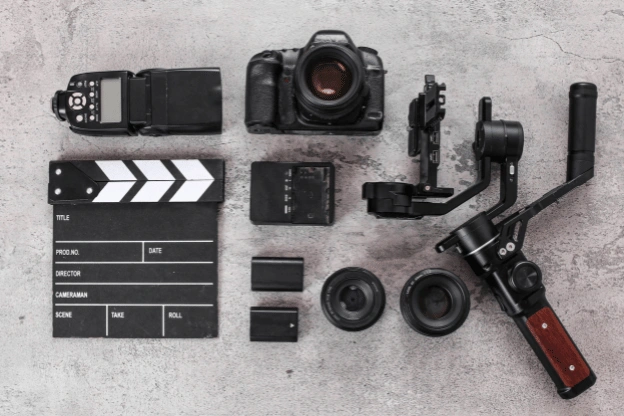
A filmmaking course is a professional education program designed to teach students the creative, technical and practical aspects of making films and video content. A filmmaking course can cover the complete filmmaking process, starting from an idea and ending with a finished film. Depending on the institute and program, students may learn:
The most important thing to understand is that filmmaking is a practical profession. You can read about cameras, lenses and editing software, but real understanding develops when you actually use a camera, shoot a scene, work with actors, edit footage and solve problems on a real production.
Many people start filmmaking by watching tutorials online or experimenting with a camera or smartphone. This can be a good starting point, but structured education can provide direction and discipline.Here are some important reasons to consider a filmmaking course. One of the biggest advantages of formal training is that you get an overview of the entire filmmaking process. Instead of learning individual skills randomly, you understand how different departments work together. For example, a director needs to understand the script, while a cinematographer needs to understand the director's visual vision. An editor needs to understand storytelling, and a producer needs to understand budgets, schedules and logistics.
One of the best things about filmmaking is that there is no single personality type required to become a filmmaker. You may be interested in stories. You may love cameras. You may enjoy editing. You may want to direct actors. Or you may simply have a strong desire to create visual content.
Prior professional experience is not always necessary for beginner-level filmmaking programs. What matters most is curiosity, creativity, willingness to learn and the discipline to practice.
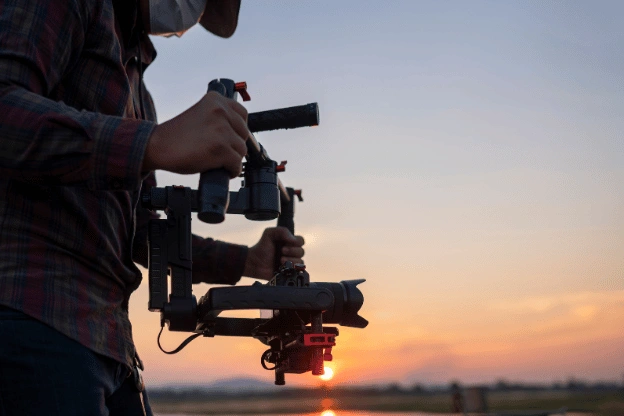
A comprehensive filmmaking course usually introduces students to several important areas of film production. These areas may include:
You learn planning, budgeting, scheduling, crew coordination and production management. The combination of these subjects helps students understand filmmaking as a complete process.
The exact curriculum varies between institutes, but a well-designed filmmaking program may include the following modules.
Good directors also need communication skills. A brilliant idea can fail if the director cannot communicate that idea to the crew. This is why direction training should combine creative thinking with practical exercises.
That idea might be a character, a situation, a personal experience, a social issue or a simple question. The challenge is turning that idea into a story. A filmmaking course can teach students how to develop ideas into structured screenplays.
One important lesson in screenwriting is that film is a visual medium. Instead of explaining everything through dialogue, filmmakers often communicate through images, actions, expressions, locations, sound and editing.
Cinematography is the visual language of filmmaking. The same scene can feel completely different depending on how it is shot. For example, camera angle, lighting, lens choice and movement can influence how an audience feels about a character or situation.
The objective is not simply to make an image look beautiful. Good cinematography should support the story.
The filmmaking process does not end when shooting finishes. A large part of storytelling happens during editing. Editors work with hours of footage and transform it into a coherent story.
Students may learn professional editing workflows, timeline organization, basic colour correction, transitions and audio synchronization. Learning editing is also valuable for modern content creators because video content is now used across many platforms.

Join the filmmaking course in NoidaHowever, good sound can completely change the viewing experience. Imagine watching a dramatic scene with poor dialogue recording or distracting background noise. Even if the visuals are excellent, the audience may struggle to connect with the scene.
Filmmaking is an audio-visual medium, so both elements need to work together.
Creative ideas need practical planning. Production is where the creative concept meets real-world limitations such as budgets, locations, schedules, equipment and people.
These skills are particularly useful for people who want to work as producers, production assistants, production coordinators or independent filmmakers.
Explore professional Filmmaking training in Noida and learn essential skills such as film direction, scriptwriting, screenplay development, cinematography, shot composition, camera operation, film production, editing, sound design, lighting, storytelling, production planning, location management, post-production, short film making, and practical filmmaking projects with industry-focused training.
Book Now →Practice gives you confidence. This is why practical training should be one of the most important parts of a filmmaking course. Instead of only sitting in a classroom, students should get opportunities to participate in filmmaking activities.
This process teaches something that textbooks cannot fully explain: how a film is actually made. A shot may be poorly exposed. The sound may contain unwanted noise. An actor may miss a cue. The location may become unavailable. Learning how to solve these problems is part of becoming a professional.
A filmmaking course can help develop both technical and soft skills.
These skills are useful beyond traditional film production as well.
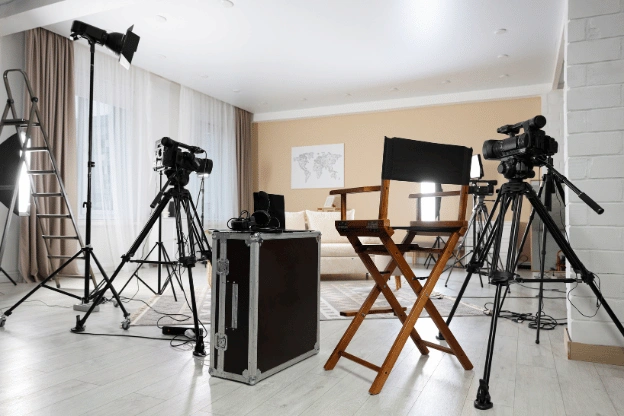
A filmmaking course does not necessarily mean you have to become a film director. The film and digital media industry contains many different roles. Depending on your interests and skills, you can explore careers such as:
Advertising and branded video production require strong storytelling and visual communication. The career you choose can depend on your interests, strengths and portfolio.
India has one of the world's largest and most diverse entertainment industries. Film production takes place across multiple languages and regions, while OTT platforms, advertising, television and digital media have expanded the demand for video content. For students interested in filmmaking, India offers several learning environments, from traditional film schools to private institutes, universities and specialized creative academies. When researching a filmmaking course in India, students should look beyond the course name.
The right course should help you move from learning concepts to actually creating work.
Noida has developed into an important media, entertainment and digital-content hub in the Delhi-NCR region.
Its proximity to Delhi and the presence of media organizations, production companies, advertising agencies, studios and digital businesses make the region relevant for students interested in media careers.
For students searching for a filmmaking course in Noida, practical exposure should be one of the main factors when comparing institutes.
A good filmmaking program should ideally provide opportunities to work on real or simulated production projects rather than limiting learning to classroom theory.
Students should also consider whether the institute provides exposure to different areas of filmmaking, including direction, cinematography, editing, scriptwriting, production and sound.
Your portfolio is one of the most important tools for entering a creative industry. You do not need twenty films to start. A few strong projects can be more valuable than a large collection of unfinished work.
If you want to become a director, show projects that demonstrate storytelling and direction. If you want to become a cinematographer, create a showreel that focuses on visual quality. If editing is your strength, create an editing reel that demonstrates pacing, transitions, storytelling and different styles. Your portfolio should answer one simple question:
Explore professional Filmmaking training in Noida and learn essential skills such as film direction, scriptwriting, screenplay development, cinematography, shot composition, camera operation, film production, editing, sound design, lighting, storytelling, production planning, location management, post-production, short film making, and practical filmmaking projects with industry-focused training.
Book Now →Filmmaking can be a rewarding career for people who genuinely enjoy storytelling and creative work. However, it is important to have realistic expectations. The industry can be competitive. Your first job may not be your dream position. You may start as an assistant, intern, junior editor, production assistant, camera assistant or content creator. The important thing is to keep learning and building experience. Today, filmmaking skills can be applied across many industries.
This broader ecosystem means filmmakers can explore different career paths instead of depending on only theatrical cinema.
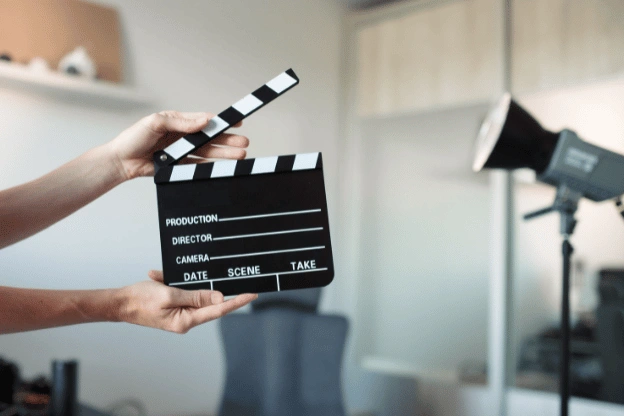
If you are planning to start a filmmaking career, keep these tips in mind. Watch Films Like a Filmmaker Do not only watch for entertainment.
A filmmaking career usually develops over time. Do not compare your first project with someone else's tenth year in the industry. Focus on consistent improvement.
There is no single formula for becoming a great filmmaker. Some filmmakers are naturally strong storytellers. Others are visual thinkers.
You need the confidence to try new ideas and learn from failure. A filmmaking course can teach techniques, but your personal creativity and commitment will shape your journey.
| Skill | What You'll Learn |
|---|---|
| Introduction to Filmmaking | Understand the fundamentals of filmmaking, different film formats, stages of production and the roles of a filmmaker in films, television, OTT and digital media. |
| Film Direction | Learn the fundamentals of film direction, visual storytelling, directing techniques, scene planning, shot selection and managing creative aspects of a film production. |
| Storytelling & Scriptwriting | Develop skills in story development, screenplay writing, scene structure, character creation, dialogue writing and script formatting for films and digital content. |
| Cinematography & Camera Techniques | Learn camera operations, shot composition, framing, camera movements, lenses, exposure, visual language and cinematography techniques for professional filmmaking. |
| Lighting for Film | Understand lighting fundamentals, natural and artificial lighting, three-point lighting, mood creation, exposure control and creative lighting techniques for different scenes. |
| Film Production & Planning | Learn pre-production planning, budgeting, scheduling, location scouting, casting, crew coordination, production design and other essential aspects of film production. |
| Sound Design & Recording | Understand production sound, microphones, dialogue recording, ambient sound, sound effects, background music and basic sound design techniques for films and digital content. |
| Film Editing & Post-Production | Learn video editing, cutting techniques, continuity, pacing, transitions, colour correction, basic visual effects and post-production workflows for professional film projects. |
| Visual Storytelling & Scene Design | Develop the ability to communicate stories visually through composition, production design, blocking, camera angles, movement, colour and creative scene construction. |
| Short Film Production | Work on practical short film projects and experience the complete filmmaking process from story development and pre-production to shooting, editing and final presentation. |
| Practical Filmmaking Projects | Gain hands-on filmmaking experience through practical exercises, camera projects, scene shoots, short films and production assignments designed around real-world filmmaking workflows. |
| Portfolio & Career Preparation | Build a professional filmmaking portfolio and develop practical skills for careers as a film director, filmmaker, screenwriter, cinematographer, editor, production professional and digital content creator. |
Film direction is one of the most important creative areas of filmmaking. A director is responsible for translating the story and screenplay into a visual experience.
A director needs more than creative ideas. Good communication, leadership, decision-making and problem-solving are equally important. A director must understand how a scene should look, how actors should perform, how the camera should capture the action and how the final edit should communicate the intended emotion. This is why film direction training should involve practical scene work rather than only theoretical discussions.
Every film begins with an idea. It may be a character, an experience, a social issue, an emotion or a simple situation. The writer's job is to develop that idea into a structured story.best filmmaking Institute in Noida, Does the curriculum cover both creative and technical aspects?
A strong screenplay gives the director and production team a foundation to work from. One important principle is that cinema is a visual medium. Instead of explaining everything through dialogue, filmmakers can use action, expressions, locations, camera work, sound and editing to communicate information.
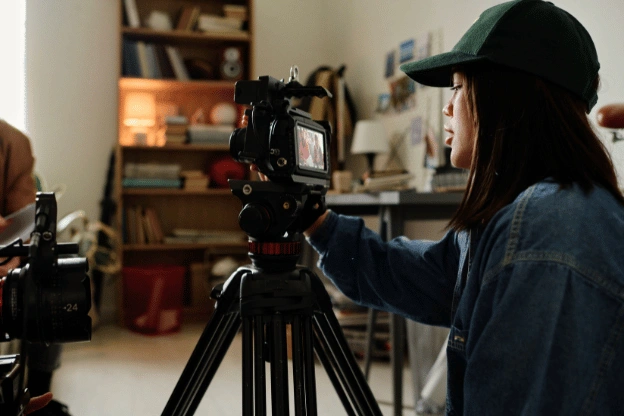
Cinematography is the visual language of filmmaking. The choice of camera angle, lens, lighting, framing and movement can change the way an audience experiences a scene.
Good cinematography is not only about making images beautiful. It should support the story and communicate mood, character and emotion.
Shooting a film is only one part of filmmaking. Editing is where raw footage is shaped into a complete story. An editor decides:
Editing can influence suspense, emotion, comedy, drama and audience attention. Students may also learn basic colour correction, audio synchronization, transitions and post-production workflows.
Sound can make a major difference to the quality of a film. Dialogue, background sounds, music and effects all contribute to the atmosphere of a scene.
Good sound supports the visuals and makes the world of the film feel more believable.
A creative idea needs proper planning before it can become a finished film. Production involves managing the practical side of filmmaking.
Production knowledge is valuable even if you ultimately want to become a director because directors need to understand the practical limitations of a production.
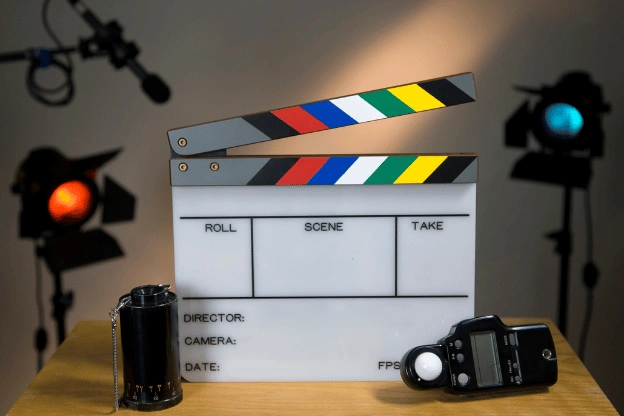
Theory gives you knowledge, but practice develops confidence. Practical filmmaking training can involve the complete production cycle.
It also teaches them how to solve problems. A location may become unavailable. The lighting may change. An actor may miss a cue. Sound may contain unwanted noise. Real filmmaking involves solving these challenges calmly and creatively.
A filmmaking course can help students develop three broad categories of skills.
These skills can also be useful in advertising, digital media, corporate video and content creation.
Choosing an acting course in Noida can be an important first step for students who want to explore a career in films, television, OTT, theatre, advertisements and digital entertainment. The right training should go beyond theoretical knowledge. Students should have opportunities to practise expressions, voice modulation, dialogue delivery, body language, improvisation, character development, scene performance, camera acting and audition techniques. For students comparing an acting institute in Noida, the focus should be on the quality and structure of training rather than only promotional claims. Practical exposure, experienced faculty, workshops, camera practice and opportunities to perform can make the learning process more meaningful.
Join RSFI's industry-focused Filmmaking Course and master Film Direction, Storytelling & Scriptwriting, Cinematography, Camera Techniques, Lighting, Film Production, Sound Design, Film Editing, Post-Production, Scene Design, Short Film Production, and practical filmmaking projects through hands-on, industry-focused training.
Explore Filmmaking Course🎭 Acting
🎬 Filmmaking
📸 Cinematography
🎞 Animation & VFX
🎭 Advertising, PR & Event
🎬 Music Production
📸 Still Photography
🏠 Interior Design
👗 Fashion Design
View Programs🎭 Short Term Program
🎬 Diploma Program
📸 Online Program
🎞 3 Years Diploma Programs
View ProgramsJoin RSFI's industry-focused Filmmaking Course and master Film Direction, Storytelling & Scriptwriting, Cinematography, Camera Techniques, Lighting, Film Production, Sound Design, Film Editing, Post-Production, Scene Design, Short Film Production, and practical filmmaking projects through hands-on, industry-focused training.
Explore Filmmaking Course