Fashion is more than clothing. It is a combination of creativity, culture, technology, design, craftsmanship and business. From creating a garment concept to selecting fabrics, developing patterns, constructing outfits and presenting a complete collection, fashion designing involves both artistic and technical skills.Fashion Designing Course
If you are searching for a Fashion Designing Course in Noida, a Fashion Designing Institute in Noida, or exploring Fashion Designing Courses in Delhi NCR, this guide will help you understand the course, subjects, skills, career opportunities, eligibility, portfolio development and important factors to consider before choosing an institute.

Fashion designing is the process of creating concepts and designs for clothing, accessories and fashion products. It combines creative thinking with technical knowledge to transform an idea into a wearable product. A fashion designer may work on everything from everyday clothing and ethnic wear to formal wear, bridal collections, fashion accessories and specialised costumes.
Modern fashion designing is therefore not limited to drawing beautiful clothes. A successful designer needs to understand how a garment is designed, developed, produced and presented. This is why a professional Fashion Design Course can provide a structured way to learn both the creative and technical sides of the industry.
Many people have an interest in fashion, but professional fashion designing requires more than an interest in clothing. A structured Fashion Designer Course can help students develop fundamental skills through guided learning and practical assignments. Students can gradually learn how to convert an initial idea into a complete design. For example, a student may begin with an inspiration image or concept, develop a mood board, select colours and fabrics, create sketches, prepare patterns and eventually construct a finished garment. This complete design process helps students understand how fashion works beyond the surface level.
For students who want a career in the fashion industry, this combination of creativity and technical training can be valuable.
Noida has developed into an important educational and professional hub within the Delhi NCR region. Students looking for creative career options can explore several fields, including fashion, media, design, animation, photography and other creative disciplines. For students specifically searching for a Fashion Designing Course in Noida, the most important consideration should not simply be the course name. Instead, students should examine the curriculum, practical exposure, faculty experience, projects, infrastructure, portfolio opportunities and industry-oriented learning.
Students can also benefit from workshops, exhibitions, practical projects and industry interactions where available.
Delhi NCR is connected to a wide range of fashion, apparel, retail, textile and creative businesses.
For students searching for Fashion Designing Courses in Delhi NCR, studying in this region can provide access to a broad ecosystem of educational institutions, fashion businesses, markets, exhibitions, events and creative communities.
Noida also offers connectivity with Delhi and other important parts of NCR, making it a practical location for students from different areas.
he advantage of studying fashion in a metropolitan region is that students can observe fashion trends, retail environments, brands, exhibitions and changing consumer preferences more closely.
However, location alone should not determine the choice of institute.
The quality of curriculum, practical training, faculty guidance and portfolio development should remain important considerations.
One of the common searches among students is Fashion Design Course After 12th. Students completing Class 12 can explore different fashion education pathways depending on their interests and career plans. Fashion designing can be considered by students from different academic backgrounds because creativity, design thinking and practical skills are central to the field.
Students should also understand whether they want to become a fashion designer, stylist, textile designer, fashion entrepreneur or work in another part of the fashion industry.
Eligibility requirements can vary depending on the type and level of programme. For many entry-level fashion courses, students who have completed Class 12 may be eligible. Certain advanced or specialised programmes may have additional requirements. Students should always check the specific admission criteria of the institute and programme they are considering. More importantly, students should not assume that only students with an artistic background can learn fashion designing. Creativity can be developed through practice. A student who is willing to experiment, observe, sketch, research fabrics and understand garment construction can gradually build fashion design skills.
A comprehensive Fashion Designing Course can introduce students to the complete fashion design process. The learning journey may begin with fundamental design principles and gradually progress toward advanced projects.
These principles help designers create visually balanced designs.
While the exact syllabus varies by institute, a comprehensive fashion design curriculum may include the following:
A successful fashion designer needs a combination of creative, technical and professional skills.
Knowledge of digital fashion tools can help designers develop and present their work efficiently.

Join the Fashion designing course in NoidaFashion illustration is one of the fundamental skills taught in many fashion programmes.
Students generally begin with basic fashion figures and gradually learn to illustrate different garments and styles. With practice, students can develop their own illustration style. Good fashion sketches do not simply show artistic ability. They communicate the designer's concept clearly.
A beautiful design can fail if the wrong fabric is selected. Different fabrics behave differently depending on their weight, structure, texture, stretch and drape. A fashion designer should therefore understand the characteristics of different textiles.
Understanding textiles allows designers to make better decisions when developing garments.
Explore professional Fashion Design training in Noida and learn essential skills such as fashion illustration, garment construction, pattern making, textile and fabric knowledge, colour theory, fashion styling, draping techniques, embroidery, apparel design, trend forecasting, portfolio development, and practical fashion projects with industry-focused training.
Book Now →Pattern making connects creatve design with actual garment production. A pattern provides the structural components required to construct a garment. Students learn how measurements, shapes and design details are translated into patterns. Garment construction then involves converting these pattern pieces and fabrics into finished garments.
These skills are particularly valuable because they help designers understand the technical limitations and possibilities of their designs.
Draping involves arranging fabric on a dress form to explore shapes, silhouettes and construction possibilities. It can help students understand how fabric falls and moves around the body. Surface design, meanwhile, focuses on the visual treatment of textiles and garments.
These techniques can add individuality to a fashion collection.
Technology has become increasingly important across the creative industries, including fashion. Computer-Aided Design can help fashion designers create and modify digital concepts more efficiently.
Students who combine traditional fashion skills with digital design knowledge can develop a broader professional skill set. For this reason, when evaluating a Fashion Designer Course, students may want to check whether digital design tools are included in the curriculum.
Fashion design is closely connected to styling and trend research. A designer needs to understand the visual direction of a collection.
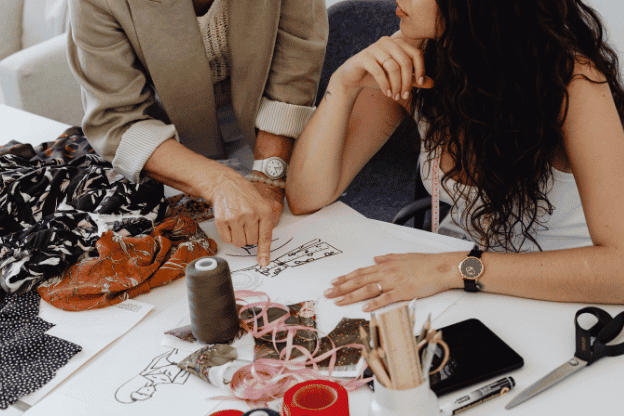
Students can use research to create mood boards and develop concepts before beginning the actual design process.
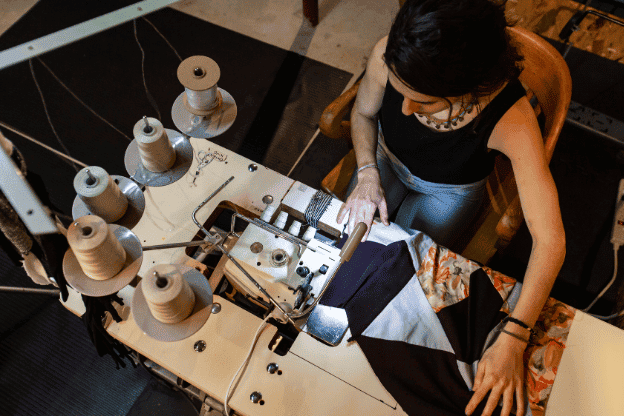
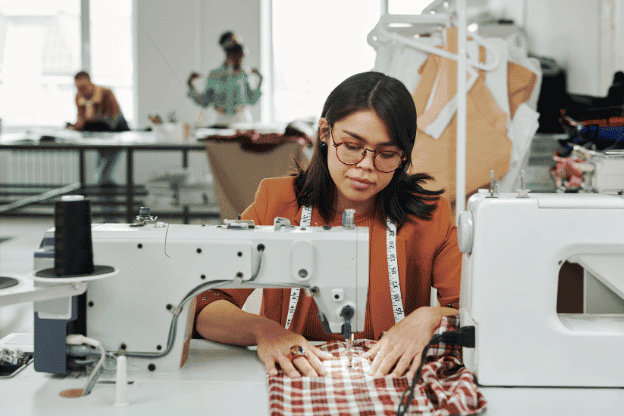
Reading about garment construction is different from actually working with fabric, patterns and sewing equipment. Practical training allows students to learn through experimentation. Students can make mistakes, adjust patterns, test fabrics and understand how their designs work in real situations. A strong learning environment should therefore balance classroom knowledge with practical assignments.
A fashion portfolio is one of the most important professional tools for an aspiring designer. A portfolio provides visual evidence of a student's creativity, design thinking and technical abilities.
Instead of simply saying "I can design," a portfolio allows students to demonstrate their work. This can be useful when applying for internships, jobs, freelance opportunities, collaborations or further education.
Explore professional Fashion Design training in Noida and learn essential skills such as fashion illustration, garment construction, pattern making, textile and fabric knowledge, colour theory, fashion styling, draping techniques, embroidery, apparel design, trend forecasting, portfolio development, and practical fashion projects with industry-focused training.
Book Now →A Fashion Design Career can develop in several directions. Students do not necessarily have to become traditional fashion designers. Depending on their skills and interests, they can explore roles such as:
A student completing a professional fashion programme can explore opportunities across:
The career path depends heavily on a student's specialisation, portfolio, practical ability and professional network.
If you are wondering How to Become a Fashion Designer, the journey can be approached step by step.
| Skill | What You'll Learn |
|---|---|
| Introduction to Fashion Design | Understand the fundamentals of fashion design, fashion trends, design principles, fashion styles and the role of a fashion designer in the apparel and fashion industry. |
| Fashion Design Principles & Elements | Learn essential design principles such as balance, proportion, harmony, rhythm, contrast and emphasis along with colour, texture, shape, line and pattern in fashion design. |
| Fashion Illustration & Sketching | Develop practical skills in fashion illustration, figure drawing, garment sketching, fashion poses, detailing and creating professional fashion design concepts. |
| Textile & Fabric Knowledge | Understand different types of fabrics, textiles, fibres, textures, prints and surface characteristics to make the right fabric choices for different garments and fashion collections. |
| Colour Theory & Fashion Styling | Learn colour combinations, colour psychology, fashion colour trends and styling techniques to create visually appealing outfits and coordinated fashion looks. |
| Pattern Making & Garment Construction | Learn professional pattern-making techniques, garment measurements, cutting, stitching and construction methods to transform fashion concepts into finished garments. |
| Draping Techniques | Explore fabric draping techniques and understand how fabric falls, fits and shapes on the body to create innovative and well-structured garment designs. |
| Fashion Styling & Apparel Design | Learn fashion styling, outfit coordination, accessories selection and apparel design techniques for creating complete and trend-focused fashion looks. |
| Fashion Trend Forecasting | Understand current and upcoming fashion trends, market research, consumer preferences, colour trends, silhouettes and seasonal collections. |
| Fashion Collection Development | Learn how to develop a complete fashion collection from concept and mood boards to fabric selection, colour palettes, garment designs and final presentation. |
| Practical Fashion Design Projects | Work on practical fashion design projects to gain hands-on experience in illustration, pattern making, garment construction, styling and collection development. |
| Portfolio & Career Preparation | Build a professional Fashion Design portfolio and develop practical skills for careers as a fashion designer, fashion stylist, apparel designer, fashion illustrator and design professional. |
The scope of fashion designing extends across creative, technical, commercial and entrepreneurial roles.
The industry includes the entire journey from concept creation to manufacturing, marketing and retail.
This creates opportunities for people with different strengths.
A highly creative student may prefer fashion illustration or design.
Someone with strong technical skills may prefer pattern making or garment construction.
A person interested in business may choose merchandising or entrepreneurship.
Someone interested in visual presentation may move toward styling or visual merchandising.
This flexibility makes fashion an interesting field for students who want to combine creativity with professional skills.
Fashion designing can also become a pathway toward entrepreneurship. Students can eventually develop their own:
Therefore, students interested in entrepreneurship should try to develop both creative and business knowledge.
Searching for the "best" institute should not be based only on advertisements or rankings. Students should compare the actual learning experience.best Fashion Designing Institute in Noida, Does the curriculum cover both creative and technical aspects?
Look at actual student projects rather than relying only on promotional claims. A careful comparison can help students make a more informed decision.
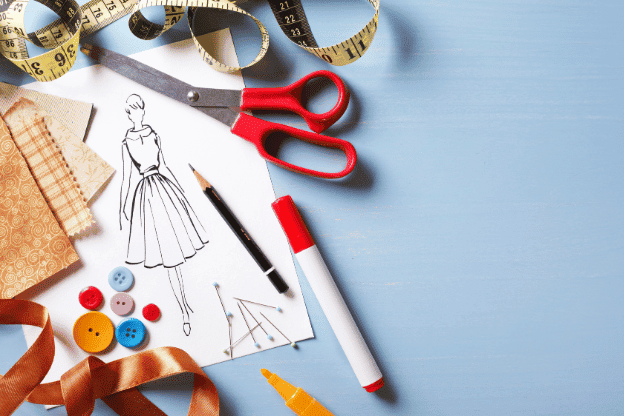
For the right student, fashion designing can be a rewarding career. It can provide opportunities to combine creativity, technical skills and professional development.
The strongest advantage is often the ability to combine creativity with practical execution. A designer who can imagine a garment and also understand how to construct it has a broader skill set than someone who focuses only on drawing.
Fashion continues to evolve with technology, digital commerce, changing consumer behaviour and new approaches to production. Digital design, e-commerce, social media, sustainable practices and personalised fashion are influencing the industry. Future designers may increasingly work across physical and digital environments. For students entering fashion today, this means learning should not stop at traditional design techniques.
The ability to learn and adapt can become one of the most valuable skills in a changing fashion industry.
A structured Fashion Design Course can provide students with a systematic understanding of the fashion industry. Instead of learning only through trial and error, students can learn design concepts, develop practical skills and create a professional portfolio.
For students searching for a Fashion Designing Course in Noida, the city offers an interesting environment for creative education. Noida is part of the Delhi NCR region and has developed into an important hub for media, entertainment, technology, retail and creative businesses. A good fashion course should ideally combine classroom learning with practical assignments and portfolio development.
For more information about courses and institute facilities, students can also explore the relevant RSFI courses and institute pages through the website.
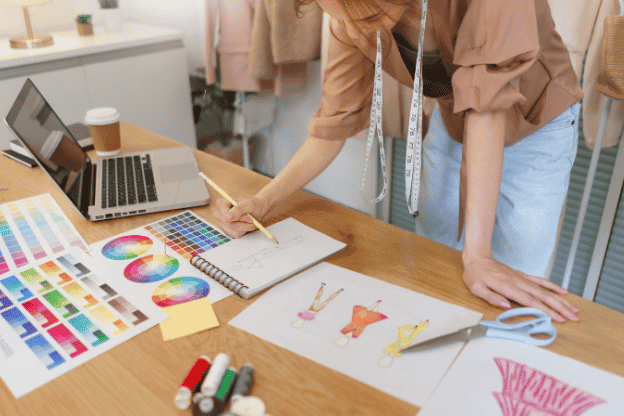
Delhi NCR is one of the most active regions for creative and fashion-related opportunities. Studying in this region can provide students with exposure to fashion brands, retail businesses, designers, media companies, photographers, stylists and creative professionals.
This wider creative ecosystem can help students understand how fashion connects with other industries.
Fashion designing is a creative field, but professional success requires more than creativity alone. Students need to understand design principles, fabrics, patterns, garment construction, styling, digital tools and professional presentation. Practical projects and portfolio development can help turn classroom learning into demonstrable skills. For students searching for a Fashion Designing Course in Noida, choosing the right learning environment can make an important difference. A well-structured Fashion Design Course should help students explore their creativity while developing the technical knowledge required to bring their ideas to life.
Join RSFI's industry-focused Fashion Design Course and master Fashion Illustration, Pattern Making, Garment Construction, Textile & Fabric Knowledge, Colour Theory, Fashion Styling, Draping Techniques, Apparel Design, Fashion Trend Forecasting, Collection Development, and practical fashion projects through hands-on, industry-focused training.
Explore Fashion Design Course🎭 Acting
🎬 Filmmaking
📸 Cinematography
🎞 Animation & VFX
🎭 Advertising, PR & Event
🎬 Music Production
📸 Still Photography
🏠 Interior Design
👗 Fashion Design
View Programs🎭 Short Term Program
🎬 Diploma Program
📸 Online Program
🎞 3 Years Diploma Programs
View ProgramsJoin RSFI's industry-focused Fashion Design Course and master Fashion Illustration, Pattern Making, Garment Construction, Textile & Fabric Knowledge, Colour Theory, Fashion Styling, Draping Techniques, Apparel Design, Fashion Trend Forecasting, Collection Development, and practical fashion projects through hands-on, industry-focused training.
Explore Fashion Design Course