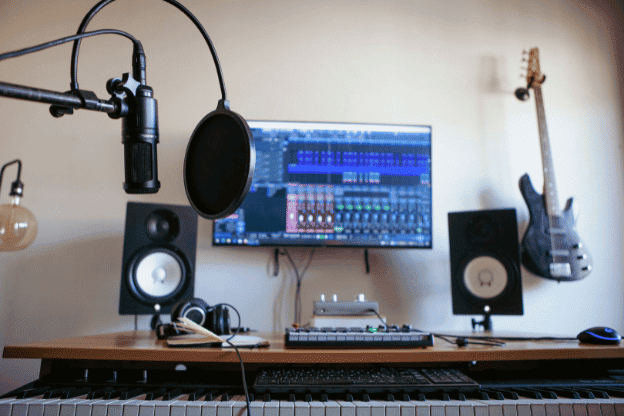
Music has changed dramatically over the last decade. A song that once required a large recording setup, multiple musicians, expensive hardware and a professional studio can now begin with a laptop, headphones, a MIDI controller and the right creative knowledge. But having music software is not the same as knowing how to produce music. music production institute in Noida
A successful music producer understands much more than pressing buttons inside a DAW. Production involves composition, arrangement, rhythm, sound selection, recording, editing, mixing, mastering, sound design and creative decision-making
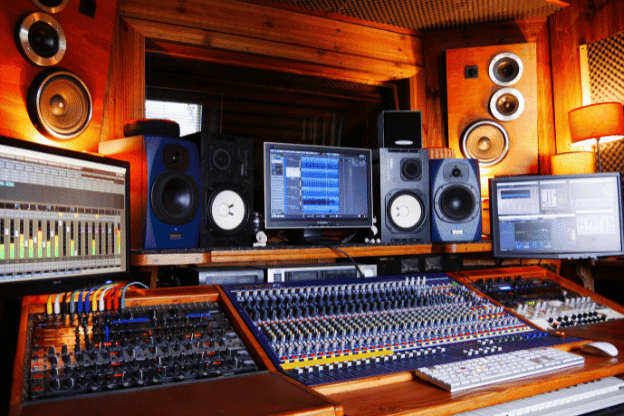
Music production is the complete creative and technical process involved in turning a musical idea into a finished audio recording. A producer may begin with a simple melody, vocal recording, chord progression, beat or even a concept. From there, the producer develops the idea into a structured piece of music
Many beginners start music production through online tutorials. This can be useful for understanding basic concepts, but learning only through random videos can make the process confusing. One tutorial may teach mixing, another may discuss synthesis and another may explain beat making, without providing a structured learning path. Students can gradually move from fundamental concepts to advanced production techniques. Instead of simply learning which button to press, they understand why a particular production decision is made.
Noida has developed into an important education, media, technology and entertainment hub within Delhi NCR. Its proximity to Delhi, Ghaziabad and other parts of the National Capital Region makes it accessible to students from multiple locations.
This makes music production education in Noida relevant not only for aspiring singers and musicians but also for students interested in film, advertising, digital content and entertainment. Students can therefore explore music as an independent career as well as a skill that complements other creative fields.
Choosing an institute should not be based only on the words "best" or "professional" appearing on a website. Students should investigate the actual learning experience. A strong audio production institute in Noida should ideally provide a balance between theory, technology and practical work
A Digital Audio Workstation, commonly known as a DAW, is the central software environment used by modern producers.
A great loop does not automatically become a great song. Many beginners create an eight-bar beat that sounds exciting but struggle to turn it into a complete composition. Arrangement solves this problem.
Mixing is one of the most important stages of music production. A song may contain excellent vocals, instruments and drums, but poor mixing can make the entire track sound unbalanced. Mixing involves controlling the relationship between individual sounds.
For example, if the vocal occupies the same frequency range as another instrument, the vocal may become difficult to hear.
Mastering is the final stage before a track is delivered or distributed. It involves preparing the finished mix for its intended use. Students can learn about:
Join the music production education in Course in Noida A strong curriculum should progress from basic concepts to advanced applications.
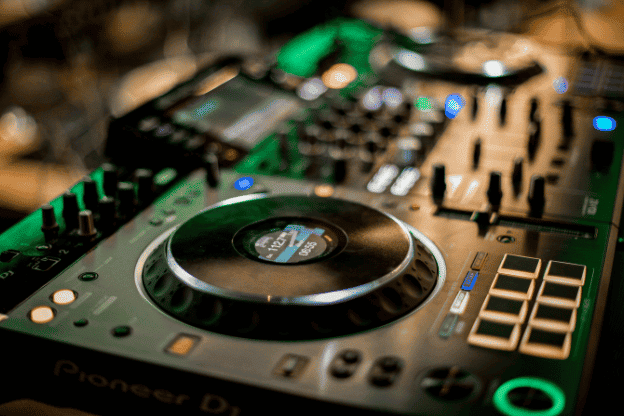
MIDI is a powerful part of modern music production. It allows producers to control virtual instruments and program musical performances digitally.
Samples can be transformed through editing, pitch shifting, time stretching, slicing and effects processing. Learning how to manipulate samples creatively can help students develop their own production style.
Learn Music Production, Sound Design, Audio Mixing, Mastering, Beat Making, Recording & DAW Techniques with hands-on practical training and industry-focused guidance.
Book Now →Music production is not restricted to one style. Depending on personal interests, students may experiment with genres such as:
The fundamentals remain important across genres, but each style has different conventions regarding rhythm, arrangement, sound selection and production aesthetics.
One of the biggest differences between watching tutorials and attending a structured course is practical exposure.
Practical learning also introduces students to the reality of collaborative production. Music is rarely created entirely in isolation at a professional level. Producers may need to communicate with singers, composers, engineers, directors, lyricists, musicians and clients.
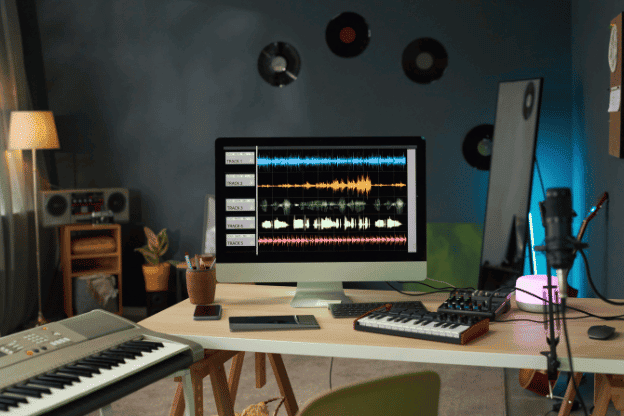
Software is important, but producers should also understand the hardware surrounding their workstation.
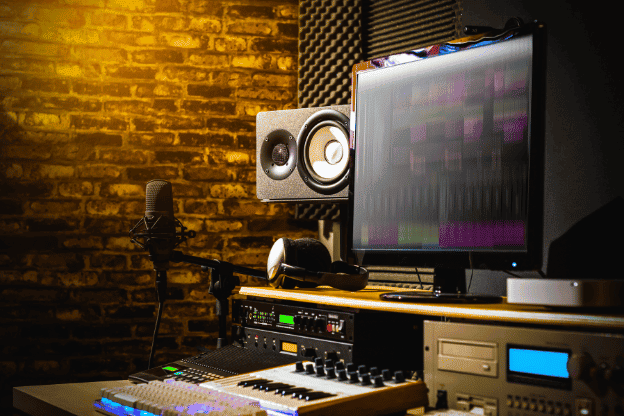
Different microphones can capture vocals and instruments differently, making microphone selection an important production decision. Students do not need to purchase expensive equipment immediately. Learning how equipment works should come before building a costly home studio.
Professional production involves more than creating a track. Students should also develop good project organisation habits.
For example, a client may request a vocal change several weeks after the original project was completed. If the session is organised properly, the producer can reopen the project and make changes efficiently.
Artificial intelligence is increasingly influencing creative industries. AI-assisted tools can help with tasks such as:
Music production can lead to several different professional paths.
Learn Music Production, Sound Design, Audio Mixing, Mastering, Beat Making, Recording & DAW Techniques with hands-on practical training and industry-focused guidance.
Book Now →The internet has made it possible for producers to work with clients outside their immediate geographical area.
A professional portfolio is often more persuasive than simply saying that you completed a course.
A scene can completely change emotionally when the background score, ambience or sound design changes.
The digital creator economy has created new opportunities for audio professionals. YouTube creators, Instagram creators, podcasters and digital brands regularly need original or customised audio.
Students who are also interested in [Podcast Production and Recording] can combine music, voice recording, editing and sound design skills to work across multiple content formats.
| Skill | What You'll Learn |
|---|---|
| Introduction to Music Production | Understand the fundamentals of music production, studio workflow, audio concepts and the complete process of creating professional music. |
| Digital Audio Workstation (DAW) | Learn professional DAWs and understand recording, editing, arranging and producing music using industry-standard software. |
| Music Composition & Arrangement | Develop melodies, chords, rhythms and song structures while learning how to arrange different musical elements into complete productions. |
| Beat Making & Rhythm Production | Learn drum programming, beat creation, grooves, patterns and rhythmic techniques to produce engaging and original tracks. |
| Sound Design & Synthesis | Explore synthesizers, samples, sound creation and sound manipulation techniques to design unique sounds for modern music production. |
| Audio Recording Techniques | Learn microphone techniques, vocal recording, instrument recording, studio setup and professional recording practices. |
| Audio Editing & Processing | Master audio editing, timing, pitch correction, noise removal and audio processing techniques for clean and polished productions. |
| Mixing Techniques | Understand EQ, compression, reverb, delay, panning, automation and other essential techniques to create balanced and professional mixes. |
| Vocal Production | Learn professional vocal recording, editing, tuning, processing and vocal mixing techniques for songs and commercial music projects. |
| Music Production for Film & Media | Explore background scores, sound design, music arrangement and audio production techniques for films, videos, advertisements and digital content. |
| Mastering & Final Production | Learn the fundamentals of mastering, loudness, dynamics and final audio processing to prepare tracks for professional release and distribution. |
| Live Projects & Music Production | Work on practical music production projects including original songs, beats, recordings and complete tracks to gain real-world studio experience. |
| Portfolio & Career Preparation | Build a professional music portfolio and develop the creative, technical and industry skills required for careers as a Music Producer, Sound Designer, Audio Engineer, Beat Maker or Composer. |
One of the most important things a student can do during a music production course is build a portfolio.
Students should also keep project files organised so they can demonstrate their production process when required. Diploma in Music Production An interior designer plans and develops interior spaces according to client requirements.
Music production is suitable for different kinds of students.
You do not necessarily need to be an expert musician before starting.
Before selecting a music production school in Noida, ask yourself several questions.
For students researching the best music production institute in Noida, Ravi Sarin Film Institute (RSFI) can be considered as part of the wider creative education ecosystem in Noida. RSFI focuses on creative and media-oriented education, making it relevant for students who want to understand music production alongside other entertainment disciplines. Music does not exist separately from the rest of the media industry. A music producer may eventually work with filmmakers, singers, actors, photographers, editors, advertisers, content creators and event professionals. This is why exposure to multiple creative disciplines can help students understand how different parts of the entertainment industry connect.
Technical knowledge is important, but professional growth requires a combination of skills.
The tools will change, so your ability to learn should remain constant.
The search for the best music production institute in Noida should ultimately be about finding the right environment for your goals. Music production is not simply about learning a software program. It is about learning how to turn an idea into sound. It is about understanding why a beat works, why a vocal feels powerful, why one arrangement creates emotion and another feels flat, why a mix sounds balanced and why certain sounds work together. Technology provides the tools, but the producer provides the creative direction. For students who are genuinely interested in music, film, digital content and entertainment, structured education can provide a useful starting point. With consistent practice, project work, mentorship and portfolio development, a student can gradually move from basic experimentation toward professional-level production
Join RSFI's industry-focused Music Production Course and master Music Production, Sound Design, Audio Mixing & Mastering, Beat Making, Recording, Music Arrangement, Electronic Music Production, and industry-standard software through hands-on practical training.
Explore Music Production Course🎭 Acting
🎬 Filmmaking
📸 Cinematography
🎞 Animation VFX
🎭 Advertising, PR & Event
🎬 Music-Production
📸 Still Photography
View Programs🎭 Short Term Program
🎬 Diploma Program
📸 Online Program
🎞3 Years Diploma Programs
View ProgramsJoin RSFI's industry-focused Music Production Course and master Music Production, Sound Design, Audio Mixing & Mastering, Beat Making, Recording, Music Arrangement, Electronic Music Production, and industry-standard software through hands-on practical training.
Explore Music Production Course