If you have ever imagined yourself performing in front of a camera, appearing on television, working in films, acting in web series, or performing on stage, professional acting training can help you understand what it takes to turn that interest into a serious skill.Acting course in Noida
Acting is often seen as simply memorising dialogues and performing them in front of a camera. In reality, professional acting involves much more. An actor needs to understand character, emotions, body language, voice, expressions, timing, improvisation, scene interpretation and camera performance. For students who have recently completed Class 12, acting can also be considered as a specialised career-oriented field. A student does not necessarily need to follow a conventional academic route if their genuine interest lies in performance and the entertainment industry. However, proper training, practice and realistic expectations are important.
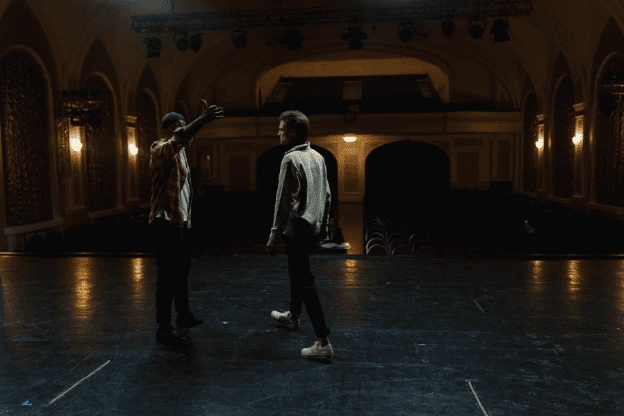
An acting course is a structured training programme designed to introduce students to the fundamentals and practical aspects of acting. A professional programme may cover both theoretical understanding and practical performance. Students can work on exercises involving voice, movement, expressions, characterisation, improvisation and scene performance.
The exact curriculum differs from institute to institute, so students should always check the actual course structure before enrolling.
Noida has developed into an important media, entertainment, education and commercial hub in the Delhi NCR region. For students living in Noida, Greater Noida, Ghaziabad, Delhi and nearby areas, studying locally can make regular training more convenient. Another important factor is the broader entertainment ecosystem of Delhi NCR. Students interested in acting may encounter opportunities connected with:
However, joining an acting institute does not guarantee a role in a film or television production. Professional acting training should instead be viewed as a way to develop skills, confidence and practical understanding of the profession.
What can I do after 12th if I want to become an actor?” There is no single mandatory academic route to becoming an actor. Students from different educational backgrounds can explore acting if they have an interest in performance. An acting course after 12th in Noida can provide a focused environment for students who want to begin professional training soon after school.

Eligibility varies depending on the institution and programme. Many beginner-level acting courses are designed for students who have completed school education, while some programmes may have different age or educational requirements. Before admission, students should check:
For students who have just completed Class 12, it is also useful to understand that acting is a skill-based profession. Academic qualifications can be helpful, but consistent practice and performance ability are also important.
A good acting programme should go beyond simply asking students to memorise dialogues. Professional acting training can involve several areas.
The exact curriculum depends on the institute and course level, so students should always review the detailed syllabus before admission.
DCamera acting is particularly important for students who want to work in films, television, advertisements or digital productions. Stage performance and camera performance are not always identical. On stage, an actor may need to project performance to an audience sitting at a distance. In camera acting, even a small expression can be visible through a close-up.
This practical exposure can help beginners become more comfortable when performing in front of a camera.

Join the Monologuesn ImprovisationStage work can help students develop confidence, voice projection, concentration, movement and the ability to perform a complete scene.
Even students primarily interested in films can benefit from theatre-based exercises because they encourage discipline and regular performance practice.
An actor's voice is one of their most important tools. Professional training can help students understand:
For example, the same sentence can communicate completely different meanings depending on tone, timing and context. Students may also practise Hindi and English dialogue delivery depending on the course..
Improvisation involves responding naturally within a performance situation rather than relying entirely on memorised dialogue. It can help students become more comfortable with unexpected situations.
These questions can help transform a dialogue-reading exercise into a more meaningful performance.
Build your career in Acting with professional training in Noida. Learn essential skills such as Acting Fundamentals, Voice Modulation, Dialogue Delivery, Facial Expressions, Body Language, Character Development, Improvisation, Scene Performance, Monologue Practice, Camera Acting, Audition Techniques, Script Reading, Theatre Acting, Screen Presence, Emotional Expression, and Portfolio Development. Gain practical experience through hands-on acting exercises, scene performances, monologue sessions, camera-based training, audition practice, and industry-focused workshops.
Book Now →Auditions are an important part of an actor's professional journey. An audition can involve a monologue, scene, dialogue, introduction, improvisation or other performance exercise depending on the production.
An acting course cannot guarantee auditions or casting opportunities, but proper preparation can make beginners more familiar with the process.
Acting is not limited to Bollywood films. A trained performer may explore several areas of the entertainment and media industry. Potential areas include:
The creator economy has introduced additional formats such as branded videos, digital sketches, social media productions and online entertainment.

If you have completed Class 12 and want to explore acting professionally, you can follow a practical step-by-step approach.
Students should learn how legitimate auditions work and be cautious about suspicious casting offers demanding large payments in exchange for guaranteed roles. No genuine training programme can guarantee that someone will become a successful actor.
Searching online for an acting institute in Noida can produce many options. Instead of choosing only on the basis of advertisements, compare institutes carefully. Consider these factors:
Fees, duration, schedules and course inclusions should be clearly communicated before admission.
Acting programmes can have different durations. Some students prefer short-term training to explore the field, while others choose longer diploma programmes for more extensive practice.
The best duration depends on the student's goals, schedule and level of commitment. A beginner should focus on quality and practical training hours, not just the number of months mentioned in a brochure.
Build your career in Acting with professional training in Noida. Learn essential skills such as Acting Fundamentals, Voice Modulation, Dialogue Delivery, Facial Expressions, Body Language, Character Development, Improvisation, Scene Performance, Monologue Practice, Camera Acting, Audition Techniques, Script Reading, Theatre Acting, Screen Presence, Emotional Expression, and Portfolio Development. Gain practical experience through hands-on acting exercises, scene performances, monologue sessions, camera-based training, audition practice, and industry-focused workshops.
Book Now →There is no single standard fee for an acting course in Noida. Fees can vary significantly depending on:
Students should request a complete fee structure before admission. It is also useful to ask whether the quoted fee includes registration, training material, practical sessions, studio work or other charges.
Acting can be a serious career option for students who have a genuine interest in performance and are prepared for continuous learning. However, students should enter the field with realistic expectations. The entertainment industry can be competitive, and success does not happen automatically after completing an acting course.
Instead of expecting immediate fame, beginners should focus on becoming better performers and building relevant experience.
Many new actors make avoidable mistakes. Completing an acting course does not automatically lead to film roles.
| Skill | What You'll Learn |
|---|---|
| Introduction to Acting | Understand the fundamentals of acting, the entertainment industry, different acting formats and the role of a professional actor in theatre, television, film and digital media. |
| Acting Fundamentals | Learn essential acting principles including observation, imagination, concentration, spontaneity, emotional expression and character understanding. |
| Voice Modulation & Speech | Develop voice control, pronunciation, diction, pitch, tone, volume, pauses and speech clarity for effective acting and dialogue delivery. |
| Body Language & Expressions | Learn how to use body language, gestures, posture, facial expressions and physical movements to communicate emotions and character intentions. |
| Dialogue Delivery | Develop professional dialogue delivery skills through script reading, voice modulation, pronunciation, pauses, emotions and natural conversational performance. |
| Emotional Acting | Learn techniques for understanding and expressing different emotions naturally while performing dramatic, emotional and challenging scenes. |
| Character Development | Understand how to study scripts, analyse characters, develop character backgrounds and create believable and memorable performances. |
| Improvisation & Spontaneous Acting | Develop creativity, spontaneity, confidence and quick thinking through improvisation exercises, acting games and unscripted performance activities. |
| Monologue & Scene Performance | Practice monologues and scene performances to improve emotional expression, dialogue delivery, characterisation and overall acting confidence. |
| Camera Acting | Learn the fundamentals of acting for camera including eye lines, subtle expressions, continuity, movement, framing and performance for close-up and wide shots. |
| Screen Presence | Develop confidence, personality, expressions and performance techniques required to create a strong and natural presence on screen. |
| Audition Techniques | Learn professional audition preparation, script analysis, self-introduction, monologue performance, camera auditions and techniques for presenting yourself confidently. |
| Script Reading & Scene Analysis | Understand scripts, scenes, characters, dialogues, objectives, situations and emotional beats to prepare effectively for different acting performances. |
| Theatre & Stage Acting | Learn stage performance techniques including projection, stage movement, expressions, blocking, ensemble acting and live performance discipline. |
| Acting for Film, TV & Digital Media | Understand different performance approaches for films, television, web series, advertisements and digital content with practical camera-based exercises. |
| Practical Acting Projects | Gain hands-on experience through scene performances, monologues, improvisation exercises, camera acting sessions, audition practice and short performance projects. |
| Acting Portfolio Development | Learn how to prepare a professional acting portfolio including photographs, introduction, monologues, performance clips and other essential audition materials. |
| Industry & Career Preparation | Develop professional skills and industry awareness for opportunities in films, television, web series, theatre, advertisements, digital content and other acting platforms. |
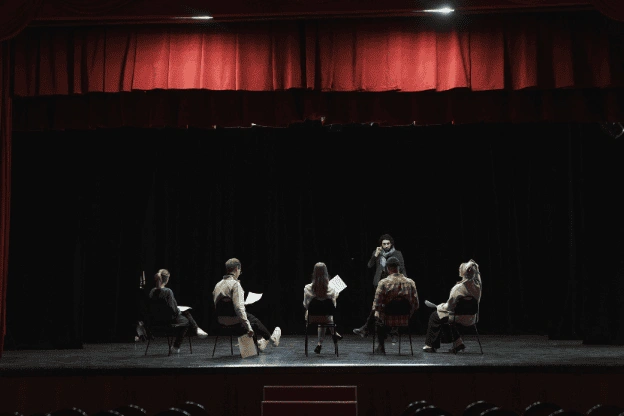
Acting is a performance-based profession. Reading about acting can provide knowledge, but performing regularly is necessary to develop practical skills. For this reason, students should look for programmes that include activities such as:
The more opportunities students have to perform and receive constructive feedback, the more familiar they can become with the process.
For students searching for an acting course in Delhi NCR, Noida can be a convenient location within the wider NCR region.
Students from Noida, Greater Noida, Ghaziabad and nearby parts of Delhi may consider local training before exploring opportunities across the wider entertainment market.
Delhi NCR also has an established theatre culture, production ecosystem, advertising industry and growing digital-content environment.
However, location alone does not determine an actor's career. Skills, preparation, professional conduct, experience and access to legitimate opportunities all matter.

An acting course may be suitable for:
It can also be useful for people who want to improve communication, stage confidence and presentation skills.
Before joining a course, understand what acting actually involves.
Try to understand why an actor performs a scene in a particular way.
One question many students have is, “Am I too young to start acting?”
If you have completed Class 12 and are already thinking about acting as a career, there is no need to wait just because you are a beginner. In fact, starting early can give you more time to learn, practise and understand the profession.
You do not need to be perfect when you join an acting course. Most students start with little or no professional experience. The purpose of training is to help you understand the basics and become more comfortable with performance.
At the beginning, you may feel nervous while performing in front of others or facing a camera. That is completely normal. With regular practice, scene exercises, voice training and feedback, confidence can gradually improve.
The important thing is to start learning with realistic expectations. Acting is not only about becoming famous. It is about learning how to understand a character, express emotions, work with other performers and respond naturally to a scene.
For a student after 12th, professional acting training can be a good way to explore whether this is genuinely the career path you want to pursue.
One of the biggest mistakes beginners make is thinking that attending classes alone will be enough. Acting is a practical skill, so you need to keep working outside the classroom as well. Start by practising small scenes and monologues regularly. Record yourself on your phone and watch the performance afterwards. Notice your expressions, voice, body language and whether your performance feels natural.
Use every audition and performance as a learning experience. The goal should not be to get famous overnight. The goal should be to become a better actor with every performance.
Choosing an acting course in Noida can be a practical starting point for someone who wants to explore acting professionally. For students who have completed Class 12, an acting course after 12th in Noida can provide structured exposure to acting fundamentals, camera performance, voice, expressions, improvisation, character development and audition preparation. But an acting career is not created by a certificate alone. The long-term development of an actor depends on consistent practice, learning, professional discipline, performance experience and the ability to keep improving. Before selecting an institute, compare the curriculum, faculty, practical training, course duration, facilities and fee structure carefully. If your goal is to work in films, television, OTT, theatre or advertising, start by developing the craft first. Build your confidence gradually, practise regularly and approach professional opportunities responsibly.
Join RSFI's industry-focused Acting Course and master Acting Fundamentals, Voice Modulation, Dialogue Delivery, Body Language, Facial Expressions, Emotional Acting, Character Development, Improvisation, Monologue & Scene Performance, Camera Acting, Screen Presence, Audition Techniques, Script Reading, Theatre & Stage Acting, Acting for Film & Digital Media, Portfolio Development, and practical acting projects through hands-on, industry-focused training.
Explore Acting Course🎭 Acting
🎬 Filmmaking
📸 Cinematography
🎞 Animation & VFX
🎭 Advertising, PR & Event
🎬 Music Production
📸 Still Photography
🏠 Interior Design
👗 Fashion Design
View Programs🎭 Short Term Program
🎬 Diploma Program
📸 Online Program
🎞 3 Years Diploma Programs
View ProgramsJoin RSFI's industry-focused Acting Course and master Acting Fundamentals, Voice Modulation, Dialogue Delivery, Body Language, Facial Expressions, Emotional Acting, Character Development, Improvisation, Monologue & Scene Performance, Camera Acting, Screen Presence, Audition Techniques, Script Reading, Theatre & Stage Acting, Acting for Film & Digital Media, Portfolio Development, and practical acting projects through hands-on, industry-focused training.
Explore Acting Course